 China Beverage Machinery
LanguageEnglish
CSD and sparkling beverage projects
Carbonated Drink Filling Line: Process and Package Scope
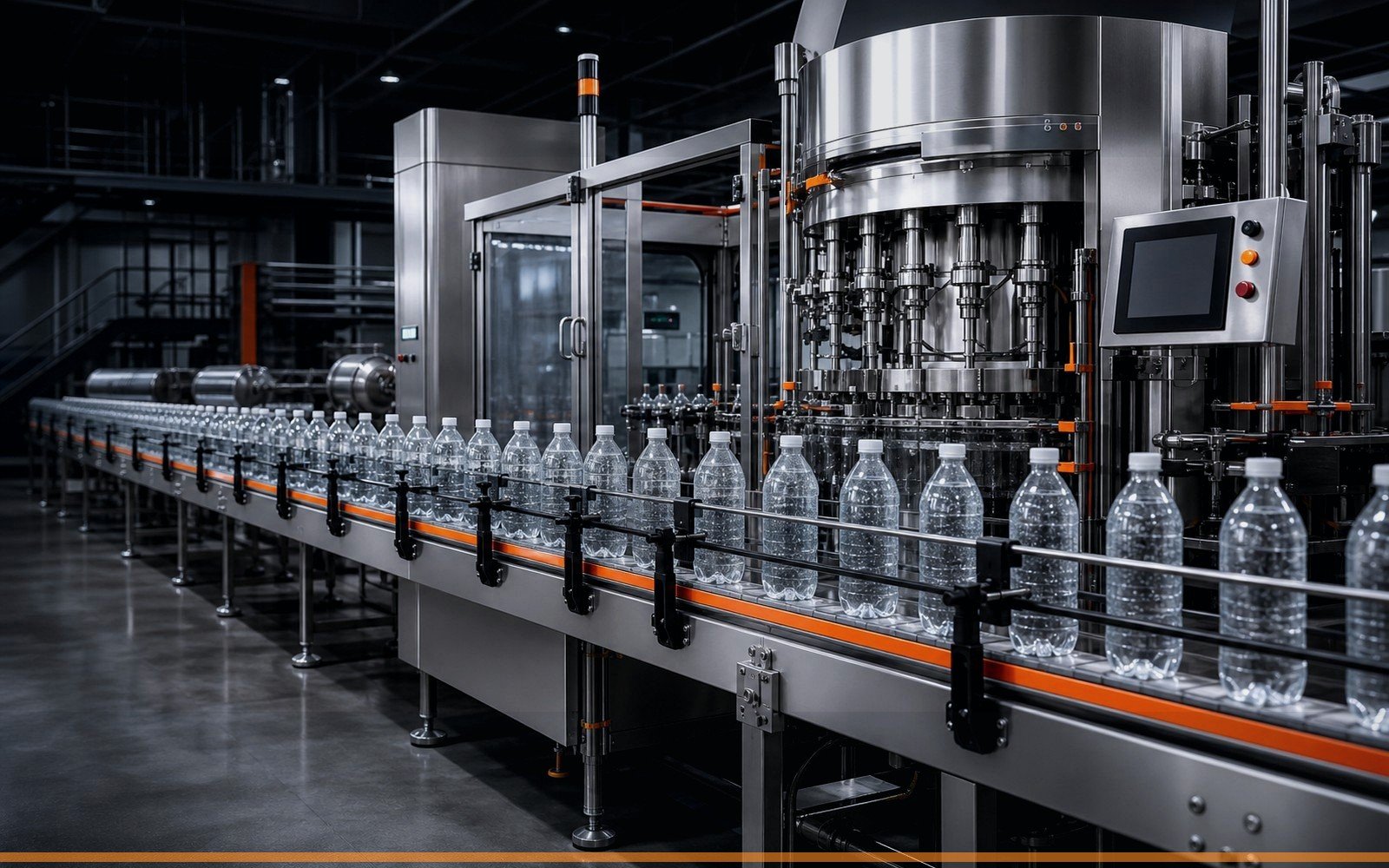
A carbonated drink filling line combines product preparation, controlled carbonation, pressure filling and closing with a compatible package. Define the recipe, serving pack and accepted output together so the mixer, cooling system, filler and packer are sized on the same operating basis.
Separate sparkling water from mixed carbonated drinks
Sparkling water and a syrup-based carbonated drink can share some process concepts while requiring different upstream equipment. Start with the water specification, recipe, ingredient handling, quality targets and cleaning needs. Include any additional product treatment required by the validated process.
| Process task | Sparkling-water questions | Mixed-drink questions |
|---|---|---|
| Product preparation | Required water quality and any approved mineral or flavor addition. | Ingredient receipt, syrup preparation, filtration where specified, and recipe dosing/mixing. |
| Carbonation | Target dissolved CO2, measurement point and operating conditions. | Target CO2 for each recipe and the effects of formulation and foaming behavior. |
| Temperature control | Inlet conditions, required product condition at filling and cooling boundary. | Temperature changes through preparation, holding, mixing and filling for each recipe. |
| Product change | Water and flavor changes included in the operating plan. | Recipe, color, ingredient and cleaning transitions included in the production schedule. |
A carbonator alone does not define the complete beverage process. Ask the proposal to identify tanks, mixing, transfer, instrumentation and cleaning connections as individual items with stated responsibilities.
Choose a PET, glass or can route
| Package | Line interfaces to confirm |
|---|---|
| PET bottle | Approved pressure-resistant bottle and closure, bottle supply or blowing, neck handling, filling/capping and conveying stability. |
| Glass bottle | Approved bottle and closure, one-way or returnable preparation, filling support, closing and the specified breakage response. |
| Can | Approved can body/end combination, can preparation, filler-seamer transfer, seam inspection and packing. |
Changing between PET, glass and cans can require a different filler/closer and container-handling arrangement. Treat a multi-package project as a defined equipment configuration with separate approved formats; do not assume a general “3-in-1” designation proves cross-package capability.
For an existing plant, record the package dimensions, transfer heights, conveyor direction, available space and control interfaces. Confirm that downstream warming or drying, if required, matches the label and final packing process.
Specify product conditions at the filler inlet
Carbonation retention and filling behavior depend on the beverage and the conditions through transfer, filling and closing. Request the allowed inlet-temperature and pressure ranges, control points, product-flow requirements and response to upstream or downstream stops. Values must come from the proposed system and agreed product trials.
- Record the carbonation target, sampling point, measurement method and agreed acceptance tolerance.
- Define how product temperature is measured and controlled between preparation and filling.
- Document the CO2 supply quality, delivery conditions, consumption basis and connection boundary.
- Specify buffer or holding arrangements, product return/disposal decisions and restart checks.
- For oxygen-sensitive recipes, include a defined oxygen measurement and acceptance plan where required.
Persistent foaming should be investigated with recipe, temperature, pressure, package and operating records. Raising speed or changing one setting without these records can hide the actual cause. Equipment adjustments should follow the approved operating procedures.
Use both bottles per hour and liters per hour
An illustrative requirement of 10,000 accepted 500 mL bottles per hour represents 5,000 liters per hour of saleable beverage. At 1.5 liters and the same bottle count, it would represent 15,000 liters per hour. The example explains the sizing change; it does not imply the same filler can maintain 10,000 BPH at both volumes.
Ask for accepted output by recipe, package and fill volume. Filling time, foaming, container handling, closure application and packing can change the achievable rate. Compare mixing and product supply with the sustained liquid flow as well as with filling-machine speed.
| Sizing item | Basis needed beyond BPH |
|---|---|
| Chilling | Product flow, inlet/outlet conditions, ambient/site conditions and other agreed cooling loads. |
| CO2 supply | Product target, incoming product conditions, process losses and any separately defined purge use. |
| Packing | Containers per pack, pack pattern, accepted packs per minute and recovery after stops. |
| Operating schedule | Available production time, product changes and a clear definition of the losses included in the output estimate. |
Test a coordinated production run
Define the reference recipe, bottle/can and closure revisions, operating conditions, duration and inspection methods before factory acceptance. If final production materials are unavailable, record the substitute and which acceptance items remain open for the site test.
- Measure accepted output, filling consistency, carbonation at the agreed sampling point and closure or seam quality.
- Record product temperature, pressure and rejects during steady operation and the agreed stop/restart sequence.
- Check one specified product or format change, including cleaning and return to accepted production.
- Verify coding, labeling and final packs with the intended package condition.
- Hand over settings, process diagrams, utility requirements, inspection procedures and the list of unresolved site-test items.
Frequently asked questions
Can a still-water filling machine be used for carbonated drinks?
Do not assume it can. Carbonated products require a suitable pressure-filling and closing configuration, compatible packaging and defined product conditions. Have the complete route assessed against the intended beverage.
Is a chiller included with a carbonated filling line?
Only if it is listed in the agreed supply scope. Define cooling loads, operating conditions, connections, piping and installation responsibility separately from the filler.
Can one quoted BPH figure apply to all bottle sizes?
Only if each format is explicitly covered by the supplier’s performance commitment and test basis. Liquid flow, filling time, package handling and downstream packing can change the output.
Continue your project planning
Planning guide from Allot Tech (Suzhou) Co., Ltd. Updated 14 September 2026.