 China Beverage Machinery
LanguageEnglish
CSD Product Preparation
Carbonated Beverage Processing System: Blending, Chilling and Carbonation
A carbonated beverage processing system prepares a stable product for counter-pressure filling. Water quality, syrup ratio, dissolved gas, product temperature, carbonation control and pressure transfer must be treated as one process.
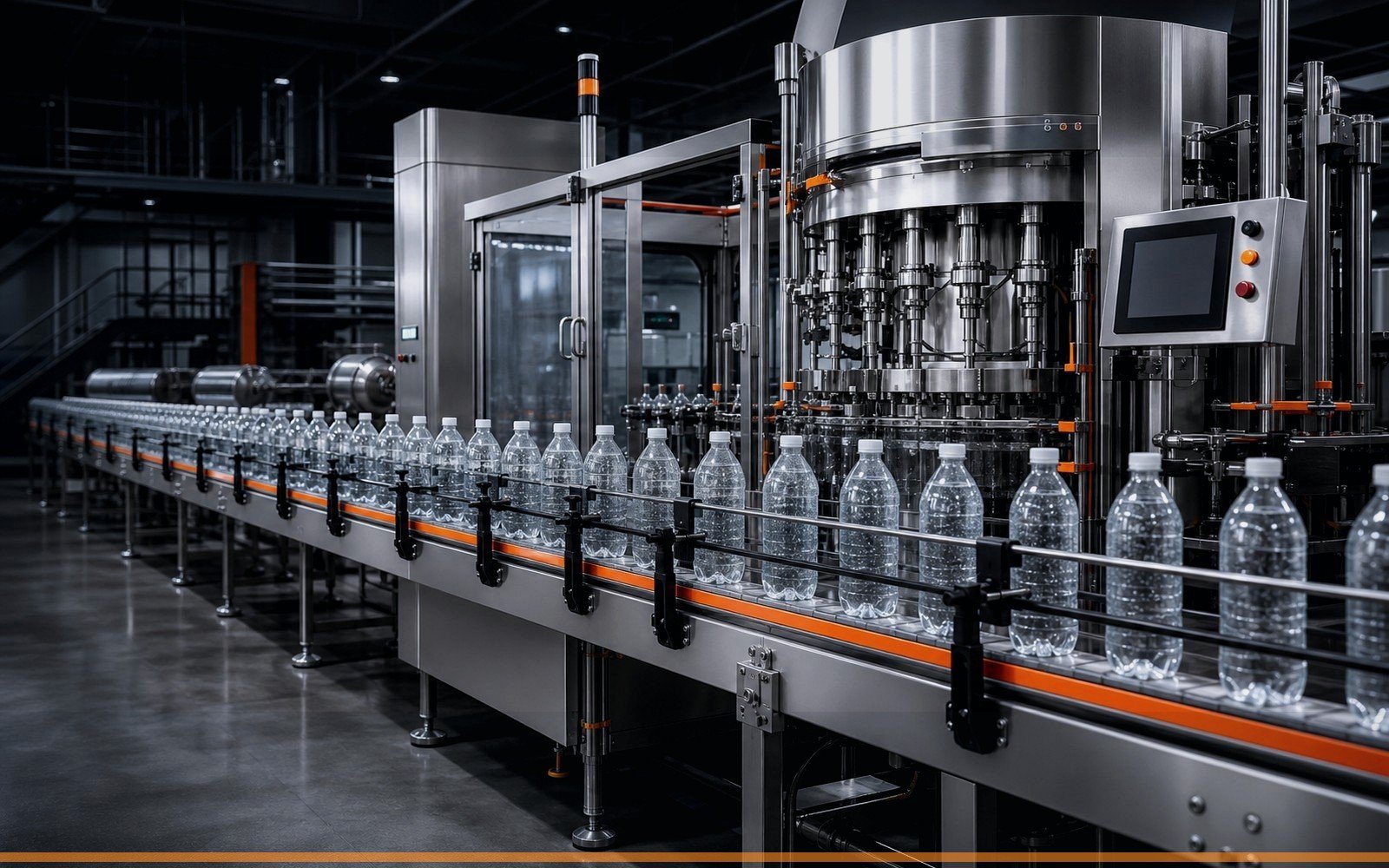
What this equipment must do inside a complete line
The line normally connects treated-water supply and syrup preparation to proportioning or blending, deaeration where required, product chilling, carbonation, buffer control and the counter-pressure filler.
Foaming, CO2 loss and unstable fill behavior are often system issues rather than filler-only issues. Product temperature, dissolved air, pressure drop, pipe route and filler bowl conditions should therefore be reviewed together.
Premix process
Water and syrup are blended before carbonation, with product quality checks and buffer strategy matched to the filler.
Controlled proportioning
Metered streams are combined under recipe control when the product and operating plan support this architecture.
Multi-SKU CSD room
Requires recipe control, flavor and color changeover planning, cleaning boundaries and a defined startup or product-recovery procedure.
Modules and interfaces to define before quotation
A useful proposal should state what is included, what is optional and where another supplier or the buyer takes responsibility.
Treated-water interface
Water quality, temperature, available flow and buffer capacity influence deaeration, chilling and production stability.
Syrup and final blending
Recipe ratio, batch release, dosing range and product sequence determine tank, meter and control requirements.
Deaeration
The need and equipment duty depend on water condition, product process and the required carbonation stability.
Chilling
Product temperature and available refrigeration conditions affect CO2 absorption, filler behavior and utility sizing.
Carbonation
Gas supply quality, pressure control, mixing contact and product flow should be monitored as an integrated process.
Pressure transfer
Pipe size, route, valves, buffer arrangement and filler interface should minimize unnecessary pressure loss and product warming.
Information that changes equipment selection
Send engineering inputs in a structured format so suppliers compare the same duty instead of quoting different assumptions.
| Decision area | What to provide | Why it matters |
|---|---|---|
| Recipe matrix | Products, syrup ratio, flavors, colors and changeover sequence. | Defines blending and cleaning architecture. |
| Water condition | Quality, temperature, dissolved air and peak flow. | Defines pretreatment interface, deaeration and chilling duty. |
| Carbonation target | Product-specific target and acceptable process variation. | Defines gas control and monitoring. |
| Filler demand | Output by container size and operating speed range. | Defines process flow, buffer and pressure transfer. |
| CO2 supply | Source, quality specification, pressure boundary and storage arrangement. | Defines gas train and safety scope. |
| Refrigeration | Available chilled-water or glycol conditions and simultaneous users. | Defines heat exchanger and utility demand. |
Decisions buyers should resolve with the supplier
Carbonation stability starts before the carbonator
Water condition, syrup temperature, dissolved air and product mixing all affect the final gas level and filler behavior.
The cold process and filler must be balanced
A process unit sized without the real filler demand can cycle, warm product or create unstable startup conditions.
Changeovers create product interfaces
Multi-flavor operation needs an agreed method for sequence, line clearing, transition product, rinsing or CIP and restart release.
Acceptance needs representative product
Water-only tests can demonstrate mechanics but cannot fully verify foaming, CO2 retention or package behavior for the actual beverage.
Send these RFQ inputs
- CSD recipe families and syrup preparation method
- Target carbonation by product
- Water quality, inlet temperature and peak flow
- Container sizes, closure and filler output
- Available CO2 supply and refrigeration conditions
- Product sequence and cleaning requirements
- Required process instruments and batch records
- Factory layout and distance to the filler
Verify these points before handover
- Blend ratio and recipe sequence verified
- Product temperature measured at process and filler interfaces
- Carbonation control recorded under stable production
- Pressure transfer and startup behavior demonstrated
- Changeover and cleaning routes checked
- Representative filled packages inspected for foam, fill and closure behavior
Keep the proposal comparable
Ask every supplier to identify equipment scope, utilities, buyer-supplied items, reference packages, controls interfaces, documentation, training, spare parts, installation boundary and acceptance method.
Final configuration depends on confirmed product, container, output, factory and regulatory requirements.
Frequently asked questions
What equipment is used before a carbonated drink filler?
A project can include treated-water storage, syrup preparation, blending or proportioning, deaeration, chilling, carbonation, pressure buffer, transfer piping and process controls.
Why must carbonated product be cold before filling?
Product temperature influences CO2 solubility and filling behavior. The required condition should be defined for the beverage, carbonation target, package and filler.
Can one system produce several soda flavors?
Yes when recipe control, product sequence, transition handling, cleaning and syrup-room capacity are designed for the SKU plan.
Can water testing confirm the complete system?
Water tests are useful for mechanical checks, but representative carbonated product is needed to evaluate foaming, carbonation retention, filler behavior and package performance.
Continue building the complete line scope
Why is carbonation low or foaming excessive at the filler?
Measure temperature, pressure and CO2 at defined points before changing filler settings. Warm product, dissolved air, unstable carbonation, transfer pressure loss, long stops and venting behavior can produce similar foam but require different corrections.
What you may be seeing
- CO2 meets target at the carbonator but not in the packaged product
- Foam increases after stops or at higher speed
- Fill level and carbonation vary together
- The problem changes with product temperature or recipe
Check these causes first
- Product temperature or pressure is outside the validated carbonation window
- Deaeration or incoming dissolved-air control is insufficient
- Pressure drops or residence time between carbonator and filler are unstable
- Filler bowl, snift, venting, headspace or closure timing does not match the product
Record before changing settings
- Measure CO2, temperature and pressure at named sampling points with timestamps
- Compare steady running with stop/restart and low-speed conditions
- Verify instrument method, calibration and sample handling
- Record syrup ratio, dissolved oxygen, package format and headspace
Email the details needed for a technical scope review
We can map the process and filling interfaces so the quotation or retrofit discussion assigns measurable responsibility to chilling, deaeration, carbonation, transfer and filling equipment.
- Beverage recipe family and target CO2
- Product temperature and pressure trend
- CO2 results at carbonator, filler inlet and package
- Filler type, speed and stop pattern
- Bottle/can size, headspace and closure
Keep guards, interlocks and lockout procedures in service. Remote review can organize evidence and supplier questions, but site-specific diagnosis, food-safety validation and equipment work must be performed by competent responsible personnel.
Send product, package, capacity and factory information
Include beverage type, container drawings, target saleable output, utilities, factory dimensions, destination country and purchase timeline. We will organize the equipment scope for quotation.