 China Beverage Machinery
LanguageEnglish
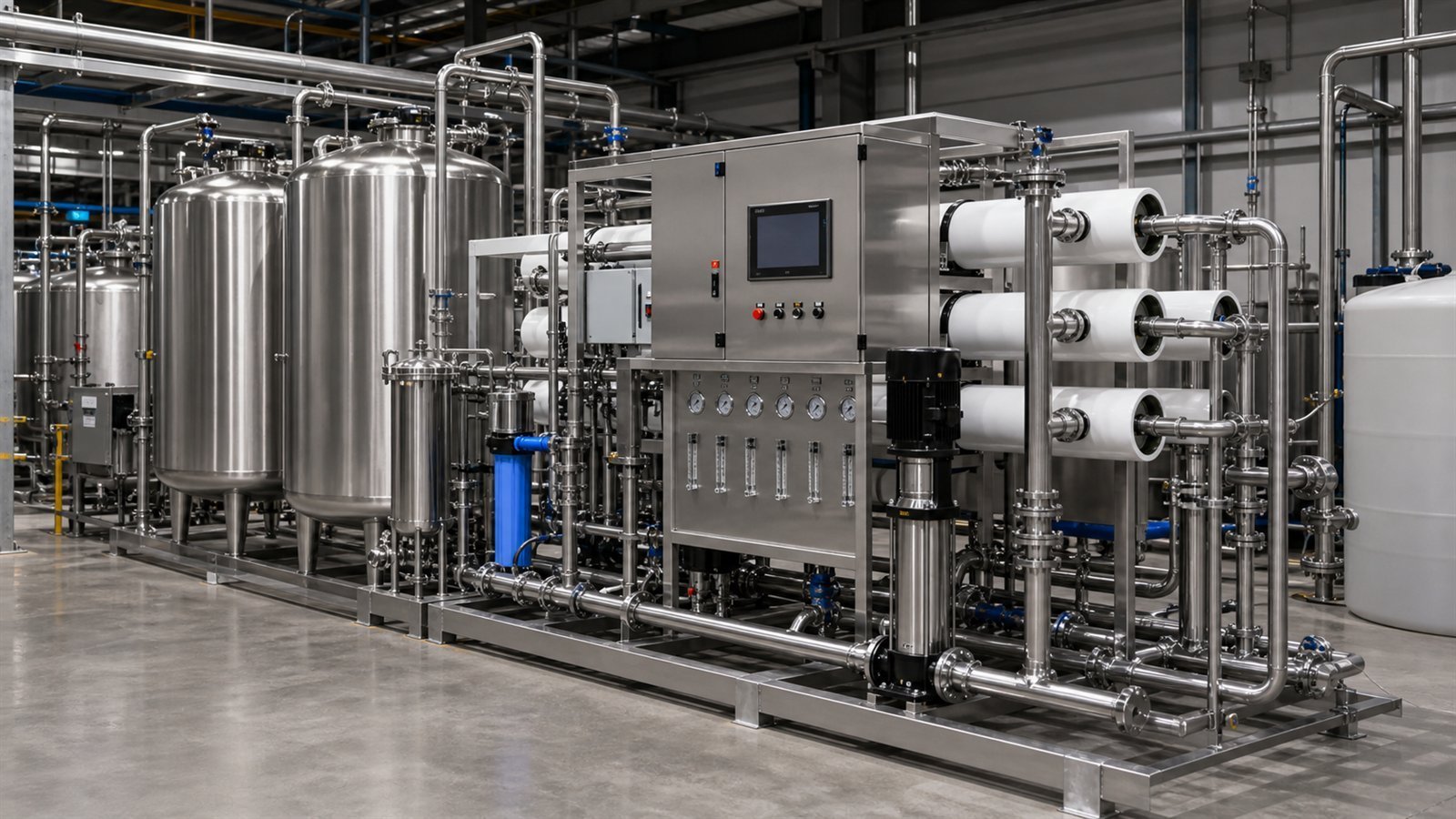
Beverage Line Engineering and Integration Support
Build a practical line concept before comparing suppliers: product process, container path, treatment system, filling block, labeling, packing, conveyors, utilities and layout constraints.
Engineering inputs
What should be confirmed before equipment selection
A clear engineering brief reduces quotation gaps and helps compare different machinery offers on the same basis.
- Beverage type, formulation sensitivity, carbonation or heat treatment requirement.
- Container type, bottle or can size, closure, label type and pack format.
- Target capacity, shift hours, future expansion and speed bottlenecks.
- Water quality, treatment process, compressed air, steam, power and drainage assumptions.
- Factory dimensions, ceiling height, door access, clean area and operator walkways.
- Required drawings, layout review, machine list and quotation comparison format.
Integration scope
Line modules that must work together
The goal is not to quote one machine in isolation. The project should connect processing, filling, packing and plant utilities.
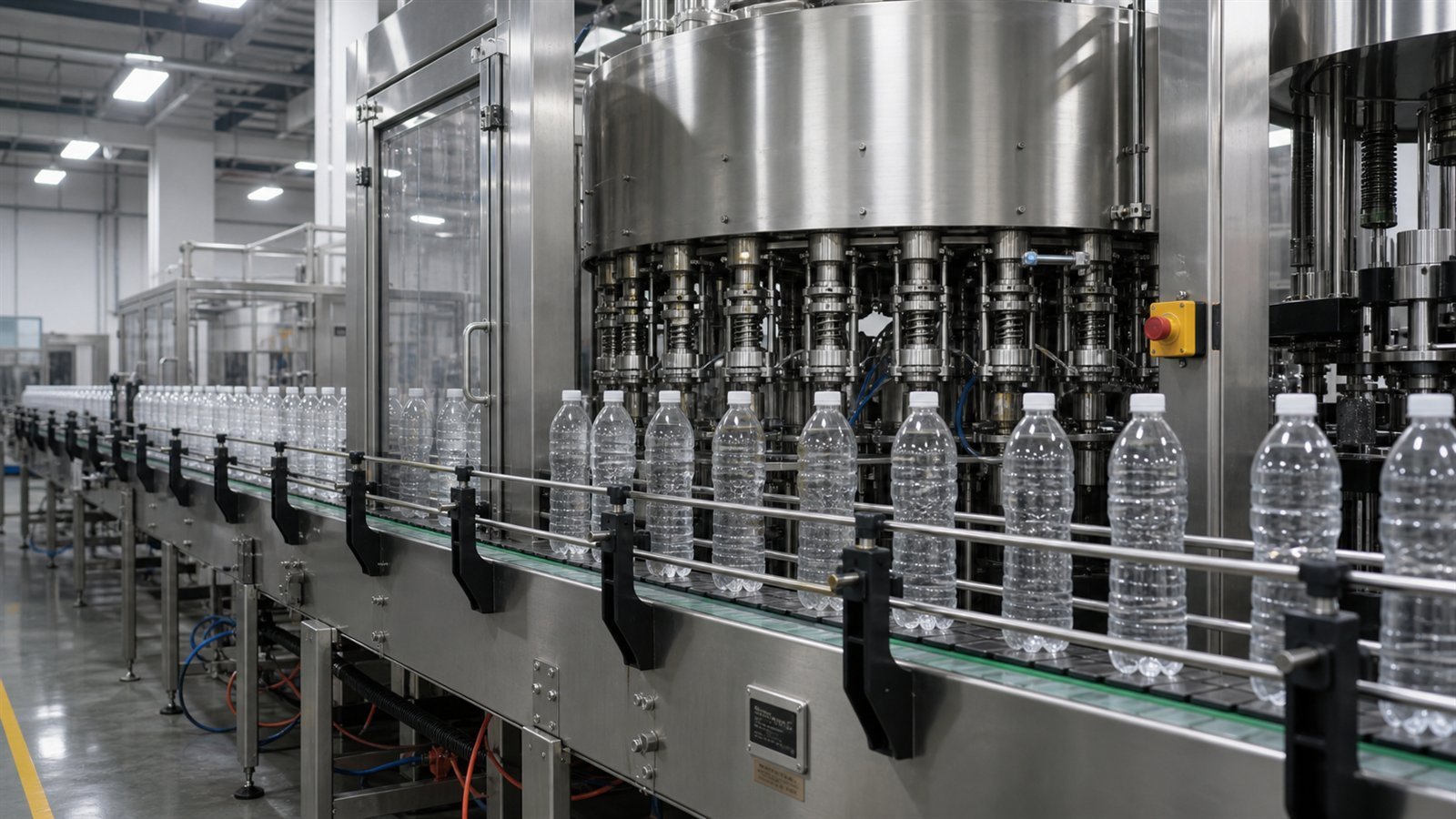
Processing to Filling
Match water treatment, blending, syrup, heating, carbonation or sterilization needs with the correct filling technology.
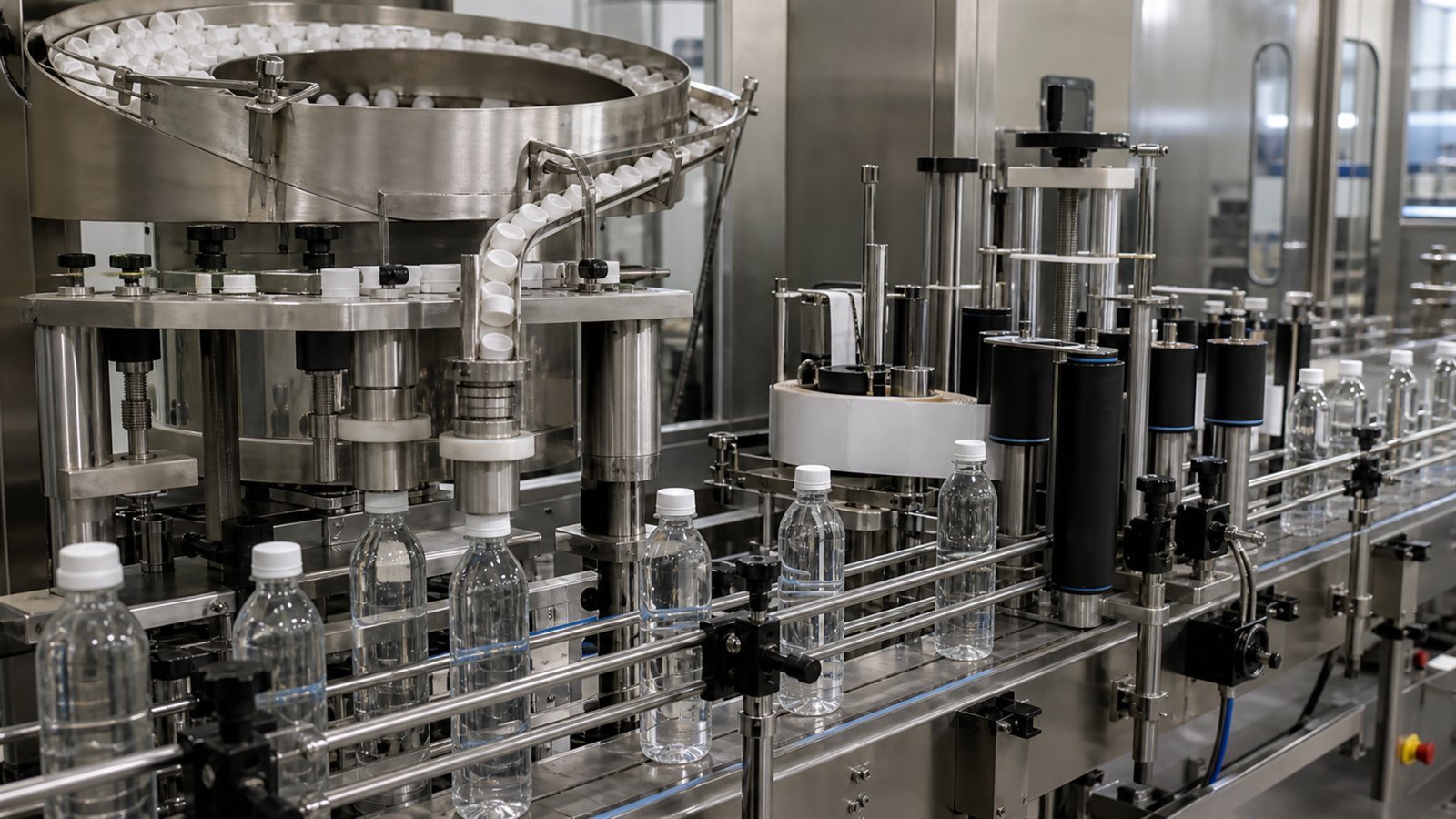
Filling to Packing
Coordinate bottle handling, caps, labels, coding, shrink wrapping, carton packing, conveyors and accumulation.
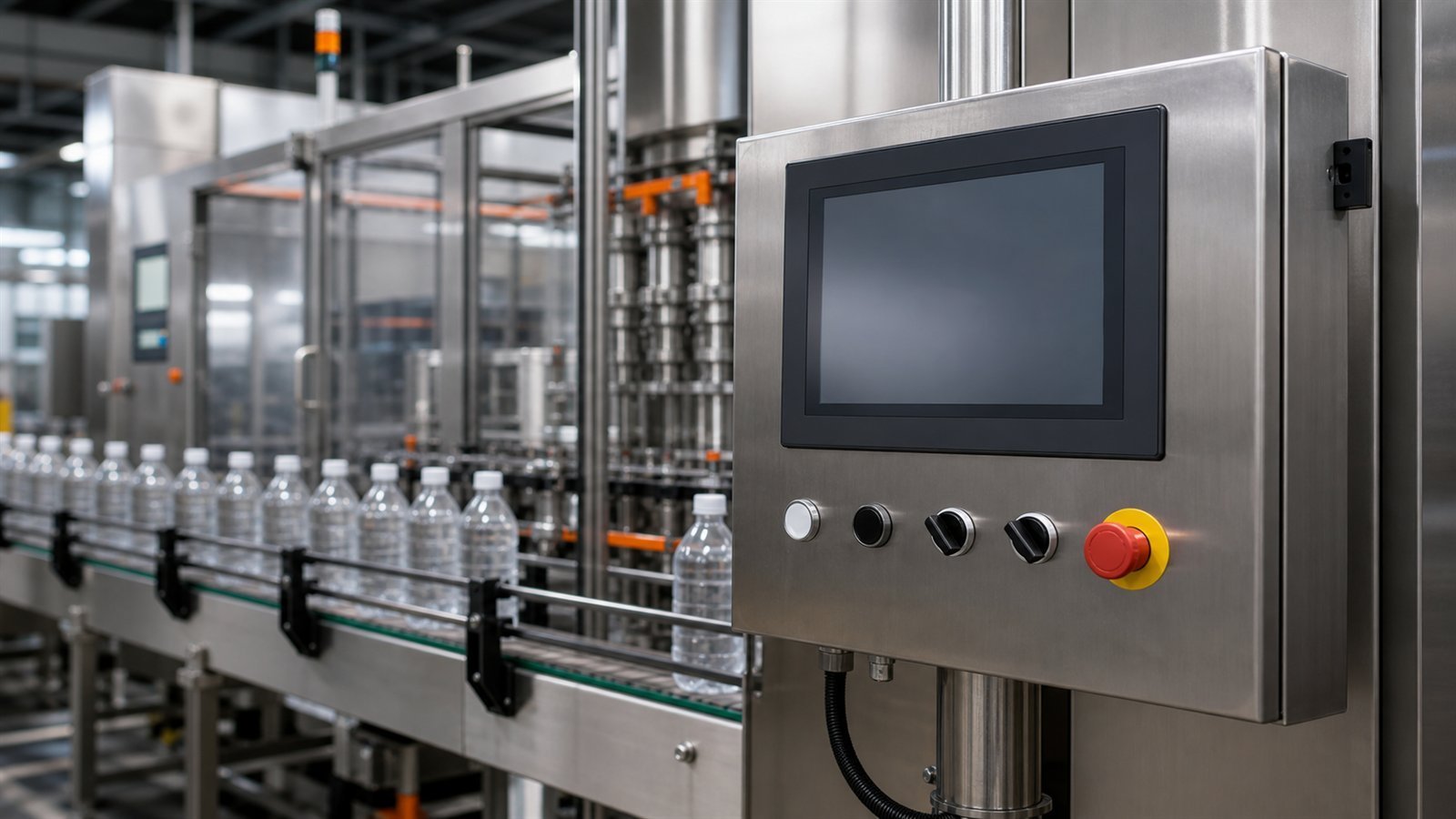
Controls and Utilities
Prepare PLC/HMI logic, sensors, interlocks, compressed air, power, drainage and maintenance access early.
Next steps
Related pages for engineering planning
Use these pages to go deeper into cost, layout and RFQ preparation.
Manage the line through an interface schedule
Engineering basis
Line engineering should maintain one register for process conditions, container transfers, elevations, utilities, control signals, sanitation boundaries, maintenance access and acceptance ownership between every machine. Update it with approved drawings and close conflicts before fabrication.
Quotation and handover
Integration also means balancing saleable output and recovery. Define accumulation, speed logic, stop propagation, restart sequence, reject handling, coding and data responsibilities. The final package should include as-built layouts, equipment list, P&IDs, electrical architecture and approved software backups.
Keep assumptions visible
Final equipment depends on confirmed product, package, saleable output, utilities, factory conditions, destination requirements and acceptance responsibilities. Unconfirmed items should remain documented assumptions or separately priced options.