 China Beverage Machinery
LanguageEnglish
Sensitive Ingredient Solution
Functional Beverage Production Line Planning
Functional beverages can include vitamins, botanical extracts, proteins, minerals or other sensitive ingredients. Equipment planning must begin with a validated formula and process, then protect dosing accuracy, product quality, cleanability and traceability through filling.
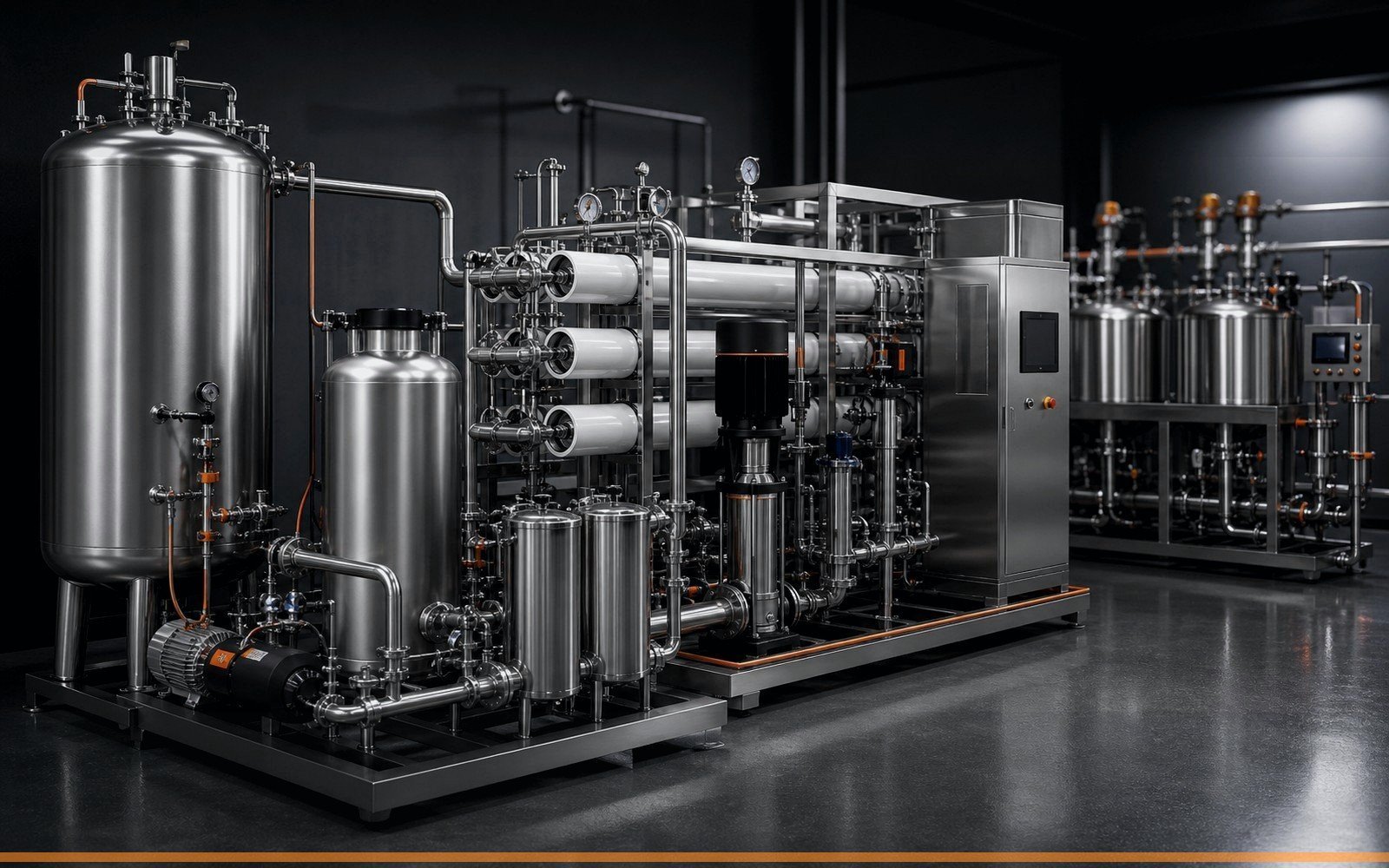
Plan the product path before selecting isolated machines
The term functional beverage covers products with very different acidity, viscosity, particles, allergens and heat sensitivity. A useful RFQ identifies product families instead of requesting one universal line.
The buyer remains responsible for formula, regulatory compliance and validated shelf life with qualified specialists. Machinery scope should transparently state what the process supports and where laboratory or process validation is required.
Modules to define in the quotation
Each proposal should identify included equipment, options, buyer-supplied items, utility battery limits, controls interfaces and acceptance responsibility.
Ingredient segregation
Define allergens, high-value ingredients, powders, liquids and storage conditions. Receiving and weighing areas may need controlled access and dedicated utensils.
Dosing accuracy
State minimum and maximum dose, tolerance, calibration, lot capture and reconciliation requirements for every critical ingredient.
Mixing and dispersion
Powders, proteins or extracts may need a specific induction, shear, hydration or filtration sequence confirmed through product trials.
Treatment route
Homogenization, deaeration, pasteurization, UHT, hot fill, ultra-clean or aseptic steps are product-specific decisions, not standard inclusions.
Hygienic transfer
Valve routing, pumps, buffer time and filler supply should minimize product hold-up while preserving the confirmed treatment condition.
Batch traceability
Define recipe versions, ingredient lots, actual additions, sampling, release status and production-code linkage before selecting controls.
Information that changes the line configuration
Use one structured data set for every supplier so quotations can be compared on the same product, package, capacity and factory duty.
| Decision area | What the buyer should provide | Engineering impact |
|---|---|---|
| Product matrix | Every recipe family, physical property, allergen and sensitive component. | Separates equipment routes and cleaning needs. |
| Dosing duty | Ingredient package, dose range, tolerance and verification method. | Defines scales, meters and automation. |
| Process validation | Confirmed treatment, hold, filling and storage conditions. | Defines thermal and hygienic architecture. |
| Package | Container, closure, barrier, label and pack drawings. | Defines filling and product-protection interfaces. |
| Campaign plan | Batch sizes, SKU order, run length and changeover frequency. | Defines tanks, routing and CIP demand. |
| Data requirements | Batch records, audit trail, coding and backup expectations. | Defines PLC, HMI and reporting scope. |
Resolve these questions before freezing the equipment list
Product trials before final design
Unknown powder dispersion, foaming, particles or heat response should be tested with representative materials before equipment is frozen.
Shared versus dedicated circuits
Allergens, strong flavors, colors and cleaning validation may justify dedicated tanks or routes even when a shared line looks cheaper.
Automation level
Choose controls from process risk, batch frequency, labor and traceability. Automation does not replace a validated recipe or calibration program.
Future products
Document likely physical and process ranges. Avoid claiming that one configuration can run every future formulation.
Send these project inputs
- Validated recipe families and physical properties
- Critical ingredient dosing ranges
- Allergen and segregation requirements
- Confirmed treatment and shelf-life route
- Container and pack drawings
- Batch and campaign schedule
- Traceability and reporting needs
- Factory, utility and timeline information
Verify these handover points
- Ingredient identification and dosing checks
- Representative mixing trials where required
- Critical process instruments verified
- Route and interlock testing completed
- Batch-to-pack traceability demonstrated
- Cleaning, backup and document package handed over
Questions buyers ask before quotation
Can one line make many functional drinks?
Only after the product matrix, physical properties, allergens, treatment routes, cleaning and package range are reviewed. Some modules may need separation.
Who validates shelf life?
The buyer should work with qualified product, laboratory and food-safety specialists. Equipment suppliers implement the confirmed process but should not invent shelf-life claims.
When are product trials important?
Trials are valuable when dispersion, foaming, particles, heat sensitivity, filtration or filling behavior is uncertain.
What should be included in batch records?
Requirements may include recipe version, ingredient lots, target and actual values, operator confirmations, alarms, sample release and finished-pack codes.
Related equipment and buyer resources
Turn product and factory data into a comparable line scope
Send beverage type, validated process, container drawings, saleable output, utilities, factory dimensions, destination, budget range and purchase timeline.