 China Beverage Machinery
LanguageEnglish
Project feasibility and concept planning
Beverage Factory Project Feasibility Study Guide
Test whether a proposed beverage factory is commercially and technically coherent before freezing the equipment list. This guide organizes the buyer inputs, engineering boundaries, risks and deliverables needed for a comparable concept study and quotation.
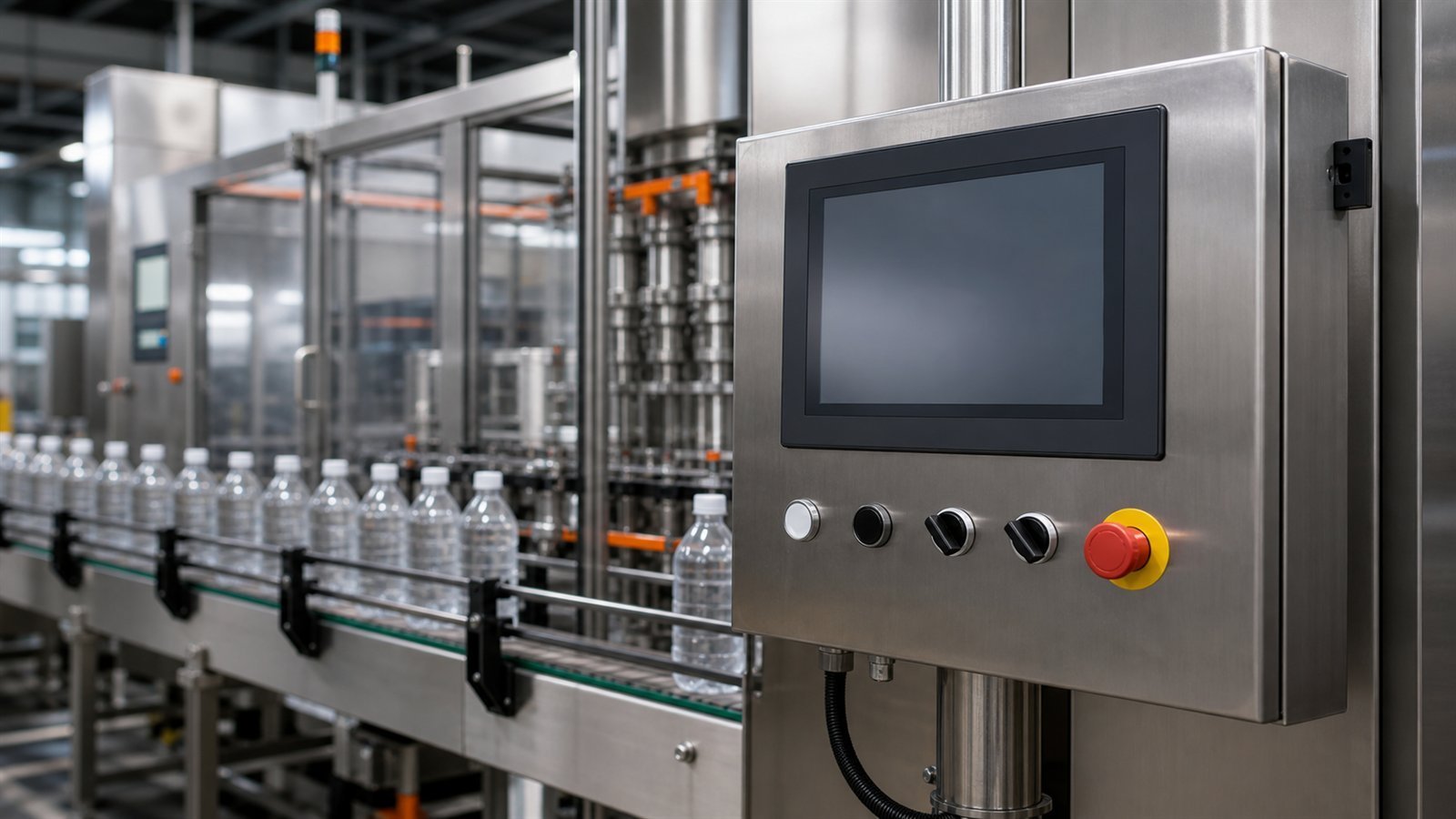
Build one project basis before comparing equipment
A feasibility study is not a decorative proposal and it is not a substitute for a supplier’s detailed engineering. It should reveal whether the planned beverages, packages, production volume, factory, utilities, logistics, budget boundary and schedule can work together. It should also show which information is confirmed, assumed, optional or still owned by another party.
Begin with the launch portfolio and production calendar. A line that can run every package individually may still fail the business case if changeovers, cleaning, batch preparation, packaging supply or warehouse dispatch consume the available hours. Use saleable output by SKU and period, then test normal and peak utility loads, staffing, storage and expansion scenarios against that duty.
Keep regulatory, food-safety and shelf-life decisions with competent product and process specialists. Equipment pages can organize engineering questions, but they do not validate a recipe or certify compliance in a destination market.
Six analyses that materially change the project
Each workstream should end with a decision, an assumption register and an identified next deliverable. Do not hide uncertainty inside a single turnkey price.
Product and package portfolio
Define launch beverages, recipe families, fill conditions, container and closure drawings, label formats, secondary packs, shelf-life basis and future SKUs. A feasibility study should expose combinations that require separate process or filling paths.
Record confirmed input, the calculation basis, the responsible party, the evidence required and any action that must close before purchase.
Saleable output and production calendar
Calculate demand by SKU, season, shift and batch. Convert market volume into good bottles, cans or packs per hour after planned changeovers, sanitation, routine stops and reject assumptions instead of using filler nameplate speed alone.
Record confirmed input, the calculation basis, the responsible party, the evidence required and any action that must close before purchase.
Process and food-safety route
Map raw-water treatment, ingredient handling, blending, thermal treatment, carbonation, filling, cleaning, inspection and release. Unknown recipes or shelf-life targets remain validation actions, not unsupported equipment promises.
Record confirmed input, the calculation basis, the responsible party, the evidence required and any action that must close before purchase.
Factory, utilities and logistics
Test the concept against land, building dimensions, columns, clear height, drainage, hygienic zoning, packaging warehouses, finished-goods routes, water, power, air, heat, cooling, CO2 and wastewater capacity.
Record confirmed input, the calculation basis, the responsible party, the evidence required and any action that must close before purchase.
Investment and lifecycle boundary
Compare the same supply scope: equipment, format parts, local works, freight, installation, commissioning, training, test materials, spares and operating utilities. Keep budget allowances separate from supplier quotations until specifications are confirmed.
Record confirmed input, the calculation basis, the responsible party, the evidence required and any action that must close before purchase.
Delivery and acceptance strategy
Create a responsibility matrix, project schedule, drawing approvals, sample trials, FAT, site readiness, SAT, performance testing and document handover plan. Assign owners and dates to assumptions that could change cost or timing.
Record confirmed input, the calculation basis, the responsible party, the evidence required and any action that must close before purchase.
Separate nominal speed, good output and annual demand
Nominal machine speed is a design input, not an annual production forecast. Model each SKU with its container, fill volume, closure, label and secondary pack. Add planned changeovers, sanitation, product preparation, routine maintenance, breaks, material replenishment and realistic reject assumptions. Then test whether upstream process batches, filler output, packaging equipment and warehouse dispatch remain balanced.
| Model input | Buyer data | Feasibility question |
|---|---|---|
| SKU demand | Annual and peak-period sales volume by package | How many production hours and campaigns are required? |
| Line duty | Saleable output, batch size, shifts and planned losses | Can process and packaging modules sustain the same duty? |
| Changeovers | Product, bottle, cap, label and pack transitions | Which transitions require cleaning, parts or recipe control? |
| Expansion | Future products, packages and volume scenarios | What should be reserved now without oversizing the first phase? |
Resolve these gaps before procurement
A visible risk can be priced, tested or assigned. A hidden assumption commonly appears later as a variation, delay, utility shortfall or failed acceptance test.
- Selecting equipment before confirming the product and package matrix
- Forecasting output from nominal machine speed without a production calendar
- Using a building sketch that omits access, drainage, hygiene and warehouse routes
- Comparing quotations with different battery limits and buyer-supplied work
- Treating recipe, package or shelf-life assumptions as validated facts
- Starting civil or utility work before interfaces and peak loads are approved
Evidence expected at the end of feasibility
The package should be detailed enough for suppliers to quote the same project boundary and for the buyer to decide whether to proceed, revise the concept or stage the investment. It does not need to pretend that all detailed engineering is complete.
- Revision-controlled project basis and open-assumption register
- Product, package and format matrix
- Process flow diagram and preliminary equipment list
- Saleable-output and production-calendar model
- Preliminary factory layout and material-flow study
- Utility load schedule with normal, peak and quality conditions
- Scope, responsibility and budget-boundary matrix
- Project schedule, risk register and acceptance strategy
When quotations arrive, reconcile deviations against the project basis. Update the mass balance, utility schedule, layout and responsibility matrix before issuing a purchase order. Carry remaining assumptions into the contract with an owner, due date and defined impact on price, schedule or performance.
Feasibility study FAQ
What should a beverage factory feasibility study include?
Connect the product and package portfolio, demand and production calendar, process route, factory and utility constraints, supply boundaries, budget assumptions, schedule, risks and acceptance strategy.
Can the final equipment price be fixed during feasibility?
Only after the product, package, capacity, scope and site basis are sufficiently defined. Earlier figures should be labeled as budget allowances with assumptions and exclusions.
Does feasibility replace detailed engineering?
No. It decides whether the concept is coherent and what must be confirmed. Detailed engineering follows with approved calculations, drawings, interfaces and supplier data.
Which output figure should be used?
Use saleable output by SKU and production period. State the difference between machine speed, line output, good output and annual volume.
Carry the approved business basis into the URS, budget and project plan
A feasibility study should not end as a general recommendation. Transfer its selected product, package, output, site, utility, budget and schedule assumptions into controlled procurement documents, and keep every unresolved dependency visible.
Create the URS
Translate the approved concept into technical and operational requirements.
Build the budget boundary
Separate equipment, project, local-work and lifecycle cost factors.
Assign execution ownership
Name parties for design, utilities, installation and acceptance.
Plan the startup path
Check whether the factory, staff and launch schedule support controlled ramp-up.
Need a project-specific equipment and responsibility review? Send the reference product, package, required saleable output, factory information, destination and purchasing timeline.
Turn the factory concept into a controlled technical brief
Send the beverage and package matrix, target output, factory drawing, utilities, destination, budget range and timeline. We can organize the open interfaces and quotation questions without inventing missing project facts.