 China Beverage Machinery
LanguageEnglish
Requirements before equipment selection
Beverage Line User Requirements Specification
A beverage line user requirements specification records what the project must achieve before a supplier selects the final equipment. It gives product, package, output, factory, utility, quality, documentation and acceptance requirements one controlled home, so an open assumption is not mistaken for an agreed technical promise.
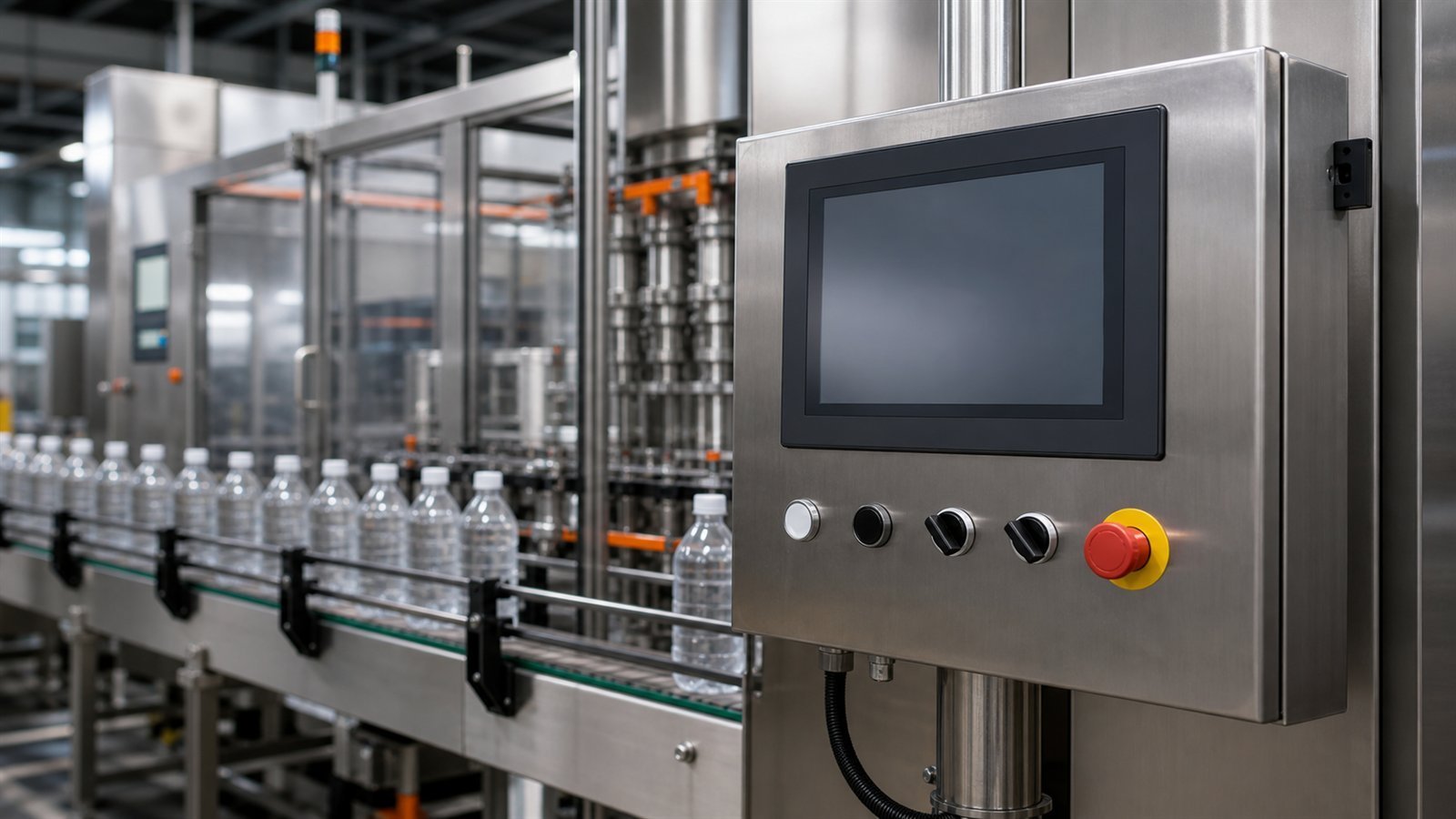
What should a beverage line URS contain?
A useful beverage line URS defines the reference beverages and packages, required saleable output, operating calendar, process and hygiene basis, factory and utility conditions, automation interfaces, documentation, training, FAT and SAT evidence, and final handover expectations. Each statement should be marked as mandatory, preferred, optional or still open, with an owner and revision status. The URS states the required result; the supplier proposal explains how the proposed line will meet it.
Project boundary: This guide is not a final process design, P&ID, safety assessment, legal contract or performance guarantee. Product safety, local compliance and final engineering require project-specific review by the responsible parties.
Move the decision forward without hiding open inputs
Keep one reference product, package and project revision through the sequence. Record assumptions and assign owners whenever the next decision depends on data that is not yet confirmed.
Use a requirement register that suppliers can answer line by line
The table below is a buyer-side structure. Add project data, mark unknowns openly and ask each supplier to return compliance, deviation, assumption and supporting evidence against the same revision.
| URS block | Buyer should define | Supplier should return | Decision evidence |
|---|---|---|---|
| Product and process | Beverage families, known product characteristics, preservation route, ingredients, particles and filling condition | Proposed process path, assumptions, exclusions and data still required | Process description and an open-input list |
| Container and final pack | Bottle, can or glass drawings; closure, label, code and secondary pack; reference and future formats | Compatibility, required change parts, format limits and sample-trial plan | Approved product-package matrix and sample status |
| Saleable output | Good output at a named reference SKU, shifts, production calendar, changeovers and counting point | Rated basis, expected constraints, line-balance method and proposed acceptance measurement | Common rate register and performance-test basis |
| Factory and access | Available floor area, clear height, columns, doors, drains, routes, hygiene zones and retained equipment | Preliminary layout, service clearances, installation access and unresolved civil interfaces | Revision-controlled layout and site question list |
| Utilities | Available voltage and frequency plus known water, air, steam, cooling, gas and drainage conditions | Required qualities, loads, connection points, peak conditions and buyer-supplied utility work | Utility schedule with battery limits |
| Controls and data | Required operating modes, recipes, user access, backups, network rules, reporting and third-party interfaces | Control architecture, interface list, backup method and items needing a separate design review | Control narrative and interface register |
| Documentation and training | Required language, file formats, approval stages, manuals, drawings, parts data and training audiences | Document register, submittal schedule, training scope and final handover package | Approved document register and training record |
| Testing and acceptance | Materials, formats, run conditions, measurements, witnesses, deviations, retests and handover conditions | FAT, SAT and startup proposal tied to approved requirements | Signed test protocols, records and open-item process |
Write requirements that remain useful after the order
Use the following controls as a decision method, not as a claim that every beverage project has the same design or commercial terms.
Separate need from solution
State the operating result and constraint first. Avoid prescribing a component or machine model unless there is a confirmed compatibility, maintenance or site reason. This lets suppliers propose a defensible solution while keeping the requirement measurable.
Make unknowns visible
Use terms such as confirmed, provisional and to be confirmed. Give each open input an owner and closure date. An acknowledged unknown can be managed; an unstated unknown becomes a different hidden assumption in every quotation.
Trace tests to requirements
Every critical requirement should point to a review, drawing, inspection or test. The URS should show which items can be verified before shipment, which require the installed site, and what evidence closes each item.
URS release checklist
- One reference beverage, container, closure, label and final pack is fully described.
- Good output is tied to a counting point, operating condition and agreed exclusions.
- Future formats are separated from launch requirements and priced as options where appropriate.
- Factory dimensions, access, drainage and known hygiene zones are attached or marked open.
- Available utility conditions are distinguished from supplier utility requirements.
- Every major mechanical, electrical, controls and process interface has an owner.
- Document language, format, review status and final handover needs are stated.
- FAT, SAT, training and startup evidence are defined before final commercial comparison.
- Supplier deviations and assumptions must be returned against the same URS revision.
- The final technical agreement identifies which URS items were accepted, changed or excluded.
Common URS mistakes that make quotations diverge
Frequently asked questions
These answers establish a planning method. Signed project documents, approved samples and responsible engineering reviews control the final equipment and obligations.
Is a URS the same as an RFQ?
No. The URS records the user's technical and operational requirements. The RFQ combines that basis with commercial instructions and requests a supplier response. They can be issued together, but they serve different control purposes.
Who should prepare the beverage line URS?
The buyer should own the requirements, with input from production, quality, engineering, maintenance, procurement and site teams. A supplier can help identify missing data, but should not silently define the buyer's operating need.
How detailed should the first URS be?
It should be detailed enough to compare solution classes and scope boundaries without pretending every engineering detail is already final. Use controlled open points for data that requires samples, testing or later design work.
Can the URS change after quotation?
Yes, but changes should be revision controlled. Record the reason, affected equipment, cost or schedule consequence, approval and the document or test that now controls the requirement.
What should be attached to a URS inquiry?
Attach the product-package matrix, available drawings and samples, target production schedule, factory plan, utility information and any existing equipment or destination requirements already confirmed.
Related beverage line planning pages
Send the project data behind the decision
Include the beverage, package, saleable output, factory, utilities, destination, timeline and available drawings or proposals. The project team can review the relevant equipment and open interfaces without turning missing data into a fixed promise.