 China Beverage Machinery
LanguageEnglish
Labeling and downstream support
Bottle Labeling Machine: Sleeve, OPP and Self-Adhesive
Select a bottle labeling machine by the approved bottle and label combination, its condition at labeler infeed, and the finished-pack requirement. Compare shrink sleeve, OPP roll-fed and self-adhesive systems before fixing the machine and utility scope.
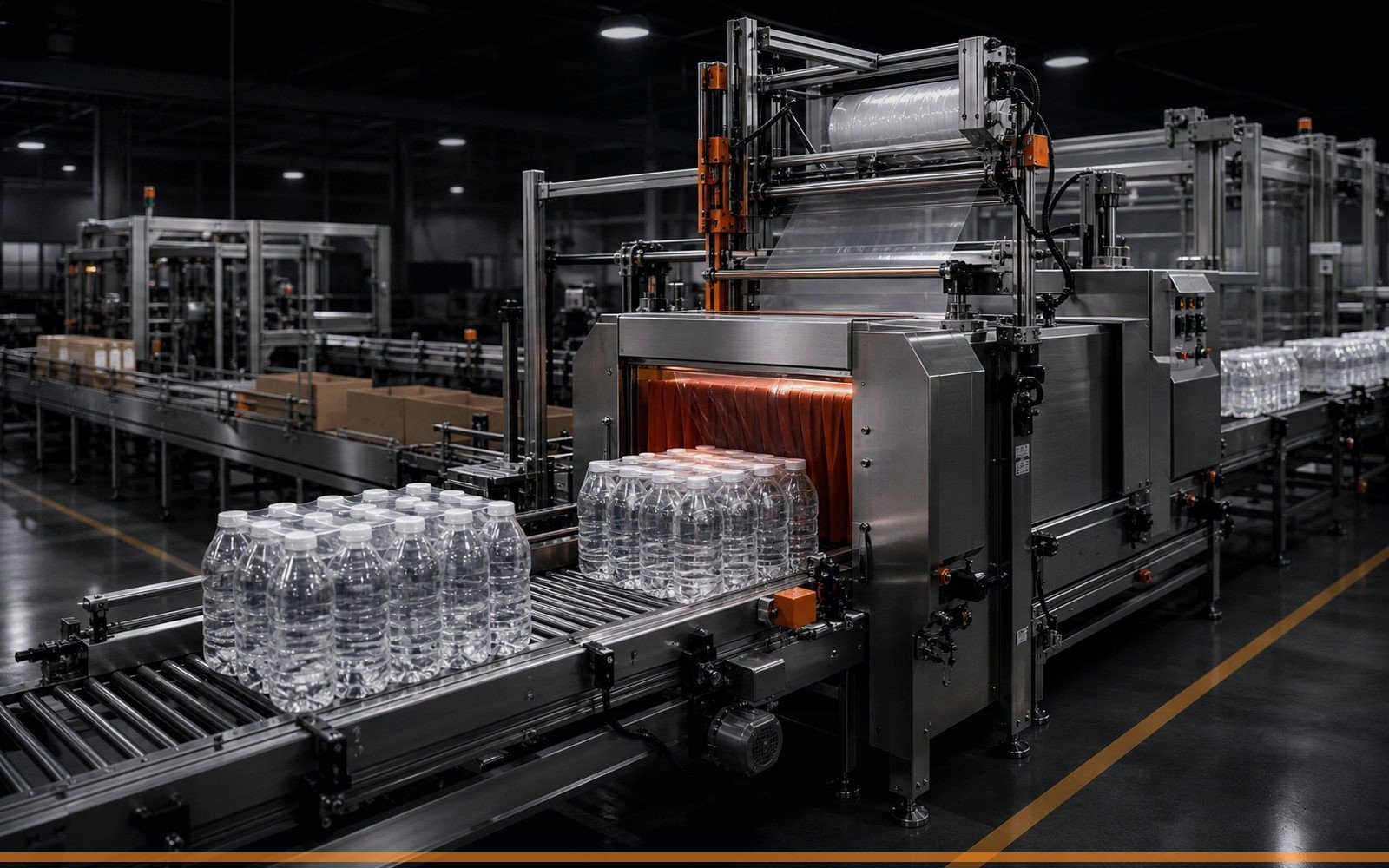
Compare three labeling methods
| Method | Application to evaluate | Extra scope and trial questions |
|---|---|---|
| Shrink sleeve | Wraparound decoration, including shaped containers when the label film and package are suitable. | Sleeve applicator and cutting, a matched shrinking process, heat/steam services, drainage and final appearance. |
| OPP roll-fed hot-melt | Wraparound labels on bottles with a suitable application panel and geometry. | Roll specification, cutting and vacuum handling, adhesive system, overlap and seam appearance. |
| Self-adhesive | Front/back, wraparound or other defined placements using pressure-sensitive labels. | Roll direction, release liner, adhesive/substrate compatibility, bottle orientation and label placement. |
These are application routes, not a ranking of quality. Test the actual bottle, label stock and filling conditions. A change from a cylindrical bottle to a strongly contoured package may change the label method rather than simply require a guide adjustment.
Control the bottle condition before labeling
A labeler cannot consistently correct unstable infeed bottles or an unsuitable label material. Measure conditions where the label is applied: a cold beverage bottle may collect condensation after apparently drying upstream. Include the time and temperature between filling, warming or cooling, drying and labeling.
- Check surface moisture, temperature, cleanliness, bottle rigidity and dimensional variation at the real application point.
- For oriented labels, define the reference feature and how the bottle is detected, turned and held during application.
- Confirm whether the code is applied to the bottle, label or closure and whether it remains readable after shrinking and packing.
- Coordinate infeed spacing and accumulation so bottle pressure and short stops do not destabilize application.
- For a replacement labeler, document conveyor height, travel direction, available length and existing stop/run and reject signals.
Send a format matrix instead of one bottle photo
| Data package | What to include |
|---|---|
| Bottle | Material, volume, body shape, dimensions, label panel, filling temperature and representative samples. |
| Label | Method, material, thickness, dimensions, artwork, overlap or placement tolerance and approved samples. |
| Roll | Core and outside diameter, winding direction, registration marks and permitted splice arrangement. |
| Production | Accepted bottles per minute for each SKU, campaign sizes, label changes and format-change expectations. |
| Inspection | Missing label, placement, code and reject-confirmation requirements with agreed defect examples. |
| Packing | Pack pattern, handles or trays, barcode visibility and label protection during transport. |
Keep alternative artwork, future bottle sizes and unapproved packaging suppliers in a separate option list. Otherwise a broad statement such as “all bottle sizes” can conceal substantial tooling and trial work.
Make the label trial measurable
Define the trial by bottle and label revision, application conditions, sustained accepted output, test duration and defect classification. Inspect the label after application and again after the intended packing step. For sleeves, compare distortion and seams; for OPP, overlap and bonding; for self-adhesive labels, placement, lifting and wrinkling.
Record time lost to roll replacement, splice handling, label breakage and restart. A quoted maximum mechanical speed without these operating conditions is not a finished-line output commitment. Ask the supplier to identify the parts and settings changed between your smallest and largest launch formats.
- Collect accepted and rejected samples with the corresponding machine and material settings.
- Demonstrate missing-label detection and reject confirmation using the agreed test procedure.
- Review drying, shrinking, adhesive handling and utility responsibilities as part of the installed scope.
- Hand over the approved format matrix, change-parts list, recipes, spare wear parts and operator checks.
Why are beverage labels wrinkled, misaligned or rejected?
Separate container condition from label and machine causes. Bottle temperature, surface moisture, shape variation, label material, orientation, spacing and speed can each create a similar-looking defect.
What you may be seeing
- Wrinkles appear only on cold or wet bottles
- Label position drifts as speed changes
- Rejects concentrate on one bottle mold or one label roll
- Sleeves twist, OPP seams move or self-adhesive labels lift
Check these causes first
- Bottle surface is wet, cold, contaminated or dimensionally variable
- Label material, adhesive, shrink curve or roll specification is unsuitable
- Container spacing, orientation or stabilization is inconsistent
- Sensor, cutter, roller, mandrel or application setup does not match the SKU
Record before changing settings
- Sort defects by bottle mold, label roll and machine lane
- Record bottle surface temperature and moisture at labeler infeed
- Compare label and bottle drawings with approved trial samples
- Capture high-speed video of spacing, application and discharge
Email the details needed for a technical scope review
We can structure a bottle-condition, label-material and application-machine trial plan before a new labeler, dryer or retrofit is quoted.
- Bottle and label drawings
- Label type, material, roll direction and sample
- Bottle temperature and dryer arrangement
- Labeler speed and reject rate by defect
- Clear photos and video of the first defect point
Keep guards, interlocks and lockout procedures in service. Remote review can organize evidence and supplier questions, but site-specific diagnosis, food-safety validation and equipment work must be performed by competent responsible personnel.
Frequently asked questions
Can a sleeve machine run OPP roll-fed labels?
They use different application processes. Treat a change between these methods as a machinery-scope review, unless the supplier explicitly offers and proves the required modular configuration.
Why can labels wrinkle after installation?
Potential causes include container moisture or temperature, label material, bottle variation, spacing and application settings. Sort defects by bottle, roll and operating condition before deciding which equipment needs correction.
Does a faster labeler increase line output?
Only if labeling is the actual bottleneck and the upstream supply, downstream packing and controls can support the increased accepted output.
Prepare your equipment scope
Send the approved product and package information, required accepted output, factory conditions, destination and purchasing timeline. Mark provisional specifications clearly so that the quotation can identify assumptions and alternatives.
Planning guide from Allot Tech (Suzhou) Co., Ltd. Updated 14 September 2026.