 China Beverage Machinery
LanguageEnglish
Package and format planning
Shrink Sleeve vs OPP Labeling: Equipment and Cost Factors
Shrink sleeve and OPP roll-fed labeling differ in how the label is applied, the bottle shapes they suit and the services they require. Compare the complete decoration process with approved bottles, label materials and artwork before choosing a machine.
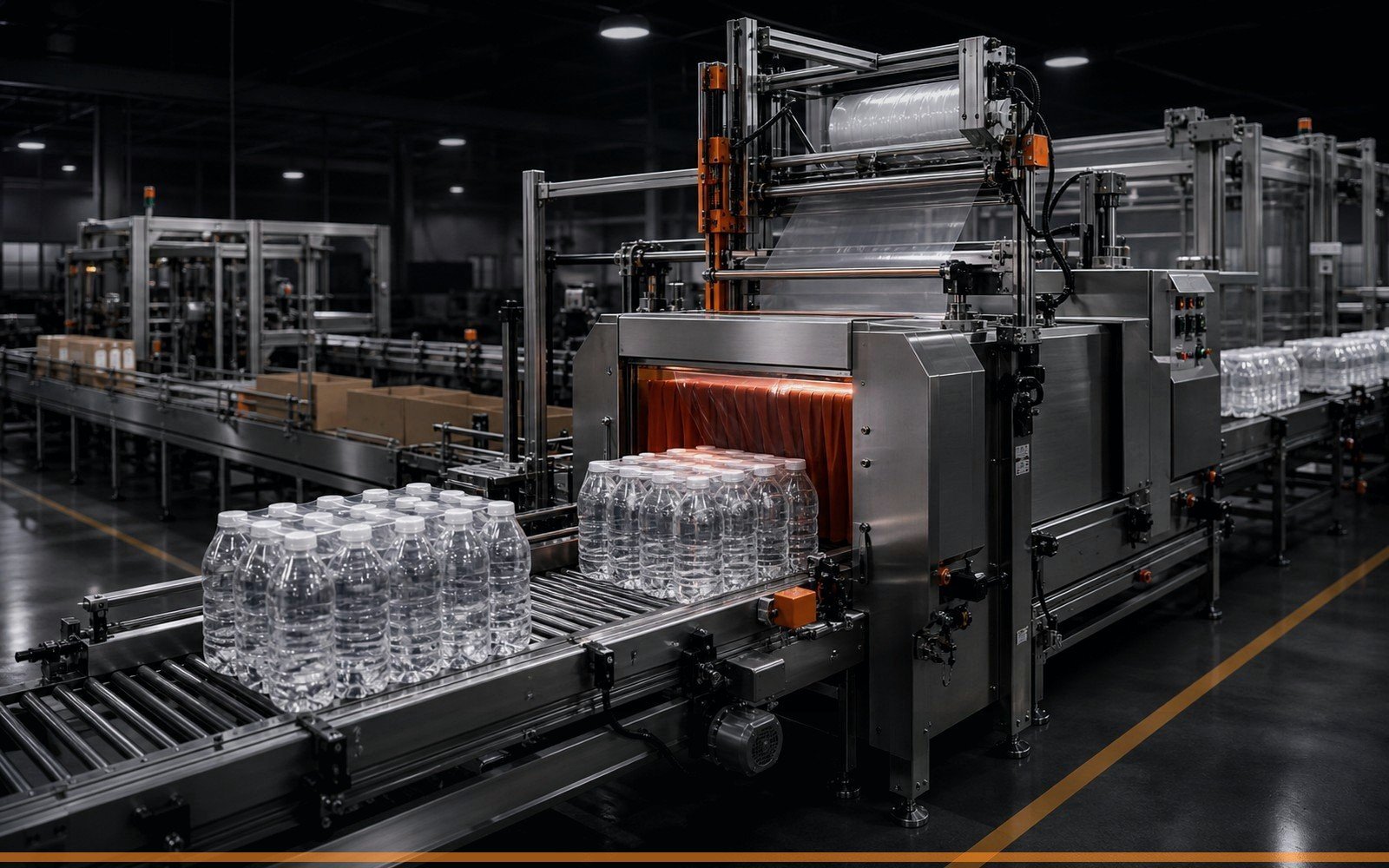
Shrink sleeve versus OPP: a direct comparison
| Decision | Shrink sleeve | OPP roll-fed hot-melt |
|---|---|---|
| Application | A sleeve is placed around the container and shrunk using a matched heat process. | A label is cut from a roll and applied around the bottle with an adhesive system. |
| Bottle geometry | Can decorate contoured packages when film shrink behavior and bottle heat response are compatible. | Usually evaluated on a suitable wraparound label panel; geometry and handling need a trial. |
| Artwork | Coverage and distortion depend on the package shape, film and shrinking process. | Artwork repeat, overlap seam and print registration must suit the label panel. |
| Supporting equipment | Applicator, cutting, shrink tunnel, heating services and possibly drying. | Roll feed, cutting/application system, adhesive supply and bottle handling. |
| Consumables | Sleeve film and process-dependent utilities and wear parts. | Roll-fed label film, adhesive and process-dependent wear parts. |
| Format change | Sleeve size, tooling, cut length and tunnel settings may change. | Label size, guides/handling, application settings and change parts may change. |
| Acceptance | Shrink appearance, seam position, distortion, legibility and container condition. | Placement, overlap, bonding, wrinkle control and legibility. |
Self-adhesive labeling is a third route when the design calls for a different placement or application method. It should be compared separately rather than described as interchangeable with OPP.
Let the package and artwork narrow the choice
Begin with the actual label coverage: a wraparound panel, a contoured full-body design, or another defined placement. For sleeves, review how artwork and barcodes behave after shrinking. For OPP, confirm label-panel geometry, leading/trailing edge bonding, overlap and bottle stability during application.
Cold filled bottles can introduce surface moisture; heated processes may affect bottle and label behavior. Trial the label where it will run in the real production sequence, including warming/cooling, drying, coding and downstream packing.
- Provide dimensioned bottle and label drawings, artwork and representative samples.
- State material thickness, roll dimensions, winding direction, registration marks and splice conditions.
- Approve the code location and verify reading after decoration and final packing.
- Confirm any recycling or deposit-system requirements with the relevant package suppliers and market scheme; label material alone does not establish acceptance.
Compare cost per accepted labeled bottle
Use the same production campaign and output basis for both methods. Compare label consumption, adhesive where used, process utilities, labor, material waste, wear parts and downtime. Include the installed supporting equipment as well as the applicator.
| Cost question | Evidence to request |
|---|---|
| Material usage | Label dimensions/weight or supplier unit price for the exact artwork and order basis. |
| Utilities | Consumption under the agreed package, operating speed and boundary, including tunnel or adhesive equipment. |
| Rejects and startup | Material consumed during roll changes, setup, rejects and restart under the agreed trial. |
| Changeovers | Tasks, parts, staffing and elapsed time between two specified launch SKUs. |
| Installed cost | Applicator, supporting process, services, drying, inspection, conveyors and commissioning scope. |
There is no universal rule that one method is always cheaper. A different bottle shape, artwork requirement, campaign length or local utility cost can change the outcome. Separate one-time tooling cost from recurring consumables and operating losses.
Run a comparison trial with defined pass criteria
Use bottles and labels from the intended suppliers, with their revisions recorded. Include the application temperature and surface condition, accepted output, trial duration and inspection method. A demonstration on a different bottle or idealized label stock is not equivalent evidence.
- For sleeves, agree acceptable distortion, wrinkles, seams, code position and bottle deformation limits.
- For OPP, agree placement, overlap, bonding, seam appearance and label-lift criteria.
- Include roll changes and controlled stops/restarts, recording waste and time to accepted output.
- Inspect decorated bottles after the agreed pack and handling process.
- Document differences, unresolved assumptions and change parts before selecting the machinery.
Frequently asked questions
Is OPP labeling always cheaper than shrink sleeve?
No. Compare consumables, utilities, waste, labor, campaign length, tooling and installed supporting equipment for the same approved package and accepted output.
Can a labeler change between sleeve and OPP by replacing the roll?
No. These use different application processes. A multi-method or modular solution must explicitly include and demonstrate the required equipment and handling configuration.
Can shrink sleeves be used on any bottle shape?
Compatibility depends on the bottle, film, artwork and shrinking process. Confirm the intended combination in trials, including container response and code readability.
What should a supplier trial return?
Approved samples, bottle/label revisions, operating conditions, accepted output, defects, waste, changeover evidence and the installed equipment and utilities boundary.
Prepare your equipment scope
Send the approved product and package information, required accepted output, factory conditions, destination and purchasing timeline. Mark provisional specifications clearly so that the quotation can identify assumptions and alternatives.
Planning guide from Allot Tech (Suzhou) Co., Ltd. Updated 14 September 2026.