 China Beverage Machinery
LanguageEnglish
Complete Line Product Handling
Bottle Conveyor and Accumulation System for Filling Lines
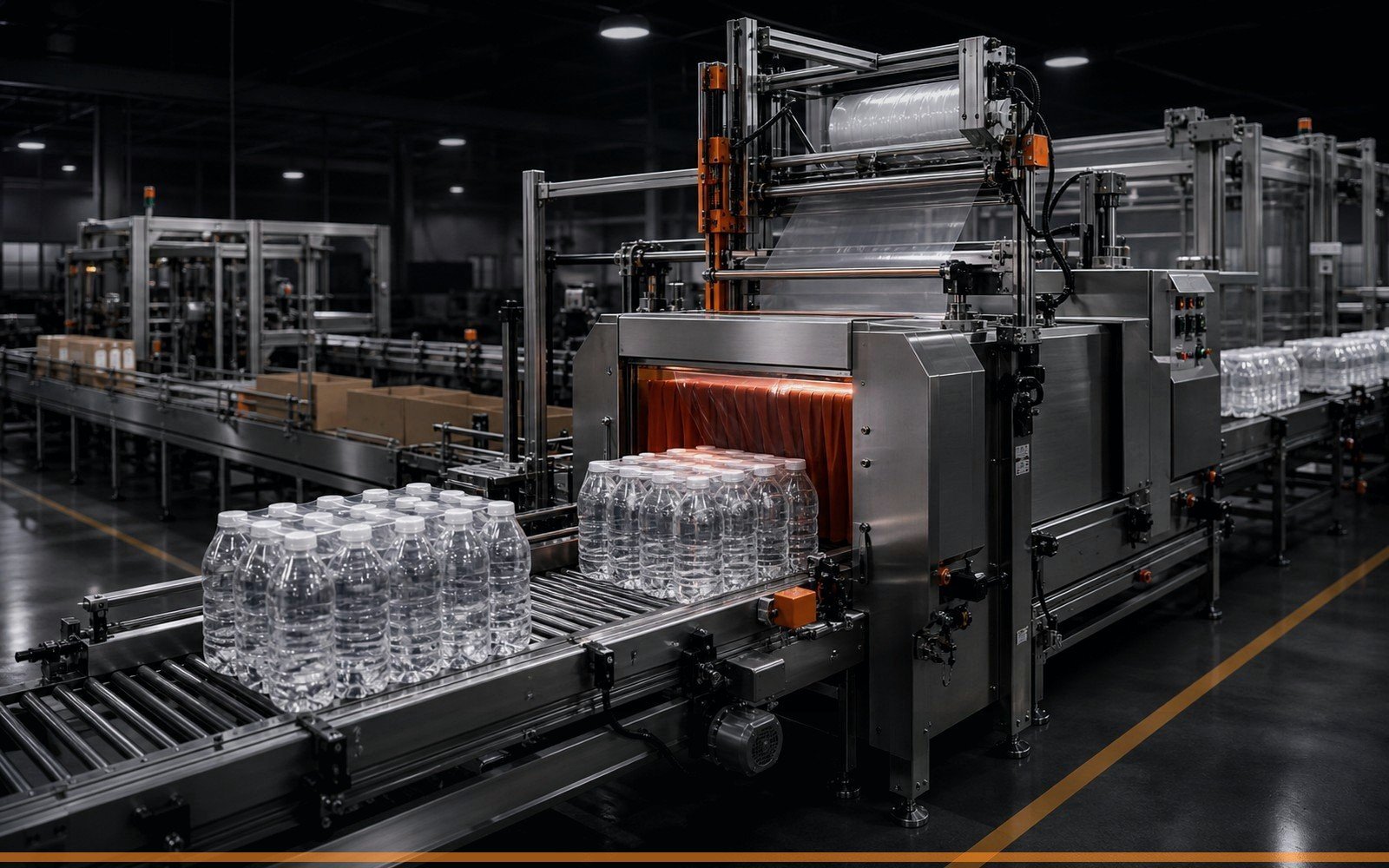
Conveyors connect the machines, but their engineering also controls product pressure, transfer stability, accumulation, machine decoupling and access. A complete line cannot reach saleable output when container handling is treated as leftover equipment.
What this equipment must do inside a complete line
The conveyor architecture should follow the package journey from empty bottle or preform through filling, inspection, labeling, coding, packing and pallet handling. Each transfer must match the container condition at that point.
Accumulation should be assigned to specific operating events. A buffer between two machines may absorb short stops, but it cannot correct a permanently undersized labeler, packer or utility system.
Empty bottle handling
Light PET bottles may use neck handling, air conveying or supported transfers based on bottle design and blower or unscrambler arrangement.
Filled bottle conveying
Guide pressure, transfer plates, lubrication policy and inspection access should match bottle stability, fill temperature and label process.
Pack and case conveying
Bundles, trays and cartons require different lane control, turning, merging, incline and accumulation methods.
Modules and interfaces to define before quotation
A useful proposal should state what is included, what is optional and where another supplier or the buyer takes responsibility.
Machine interface
Confirm infeed and discharge elevations, speed signals, starwheel or dead-plate geometry and who owns each interface.
Container guide design
Every bottle and pack drawing should be reviewed for base stability, center of gravity, surface finish and guide contact.
Accumulation zones
Define which stop scenarios each buffer should absorb, the acceptable product pressure and the recovery logic after a restart.
Line controls
Machine states, speed references, photoeyes, jam detection and restart sequencing should be documented across supplier boundaries.
Access and maintenance
Walkways, crossings, cleaning access, chain removal, lubrication points and safe isolation belong in the layout review.
Changeover
Guide adjustments, lane changes, recipe settings and change parts should be listed for every bottle, label and pack format.
Information that changes equipment selection
Send engineering inputs in a structured format so suppliers compare the same duty instead of quoting different assumptions.
| Decision area | What to provide | Why it matters |
|---|---|---|
| Package matrix | Empty bottles, filled bottles, cans, glass and finished packs. | Defines conveyor type, guides and transfer method. |
| Machine speeds | Normal, minimum and maximum speed for every connected machine. | Supports line balance and control zones. |
| Stop scenarios | Expected short stops, label roll changes, film changes and pallet handling. | Defines useful accumulation rather than arbitrary length. |
| Layout | Machine positions, columns, doors, drains, walkways and maintenance zones. | Defines routing and access. |
| Surface condition | Dry, wet, hot, cold, labeled or unstable containers. | Defines chain, lubrication and guide materials. |
| Controls | Interface signals, ownership, network and alarm requirements. | Defines integration and commissioning work. |
Decisions buyers should resolve with the supplier
Accumulation must have a purpose
State the event and duration that a buffer is intended to absorb. Extra conveyor length without control logic may only increase pressure and floor use.
Transfer details decide container stability
Small elevation differences, gaps, guide transitions and speed ratios can cause repeat jams even when individual machines run correctly.
The slowest repeated operation sets line output
A packer with frequent film changes or a labeler with long roll changes can limit saleable output despite a faster filler.
Access is part of performance
Operators need safe space to clear jams, replace consumables, clean and maintain equipment without blocking production routes.
Send these RFQ inputs
- Drawings and samples for every bottle, can and pack
- Machine list with rated and normal operating speeds
- Factory layout with columns, doors, drains and access routes
- Expected label, film, tray and carton change frequency
- Wet or dry conveyor and lubrication preference
- Required accumulation events and operating philosophy
- Electrical and controls interface standard
- Future SKU and machine expansion plan
Verify these points before handover
- Every package format transferred through all interfaces
- Jam detection and stop propagation demonstrated
- Accumulation and controlled recovery tested
- Guide adjustments and change parts verified
- Operator crossings and maintenance access reviewed
- Interface signal list and as-built layout handed over
Keep the proposal comparable
Ask every supplier to identify equipment scope, utilities, buyer-supplied items, reference packages, controls interfaces, documentation, training, spare parts, installation boundary and acceptance method.
Final configuration depends on confirmed product, container, output, factory and regulatory requirements.
Frequently asked questions
How much conveyor accumulation does a filling line need?
There is no universal length. Accumulation should be calculated from the stop events to be absorbed, machine recovery behavior, container pressure limits, available space and line-control strategy.
Can conveyors increase line capacity?
Conveyors cannot raise the true capacity of an undersized machine. They can reduce the effect of short stops and improve recovery when the connected machines are correctly balanced.
What information is needed for conveyor design?
Provide all container and pack drawings, machine positions and speeds, infeed and discharge details, factory layout, stop scenarios, access requirements and control interfaces.
Why do stable machines still jam at transfers?
Jams can come from guide transitions, elevation gaps, speed ratios, package tolerances, surface condition, bottle pressure or poorly coordinated stop and restart logic.
Continue building the complete line scope
Why do bottles jam, tip, scuff or fall at conveyor transfers?
Locate the first unstable transfer and relate it to container geometry, guide clearance, speed relationship and back pressure. A jam seen downstream may begin with poor spacing or orientation several transfers earlier.
What you may be seeing
- The same transfer jams repeatedly at higher speed
- Lightweight bottles tip when accumulation pressure builds
- Scuffing or deformation increases during stops
- One SKU runs well while another becomes unstable
Check these causes first
- Guide rails, dead plates, starwheels or timing screws do not match the container
- Conveyor and machine speed relationships create gaps or excessive back pressure
- Bottle center of gravity, base design or surface condition is unstable
- Sensors and accumulation logic react too late or at the wrong location
Record before changing settings
- Mark the first physical contact point where the bottle loses control
- Record normal-speed and slow-motion video without bypassing guards
- Compare conveyor and adjacent-machine speeds during running and recovery
- Check bottle drawing, samples, guide gaps and change-part identification
Email the details needed for a technical scope review
We can organize transfer, accumulation and controls evidence into a retrofit scope covering change parts, guide geometry, speed zones, sensors and acceptance trials.
- Bottle drawing, weight and physical samples
- Line layout and transfer elevations
- Conveyor and adjacent machine speeds
- Video before, during and after the jam
- SKU, temperature and whether bottles are empty or filled
Keep guards, interlocks and lockout procedures in service. Remote review can organize evidence and supplier questions, but site-specific diagnosis, food-safety validation and equipment work must be performed by competent responsible personnel.
Send product, package, capacity and factory information
Include beverage type, container drawings, target saleable output, utilities, factory dimensions, destination country and purchase timeline. We will organize the equipment scope for quotation.