 China Beverage Machinery
LanguageEnglish
Equipment module guide
Automatic Bottle Rinsing Machine: Air and Water Options
An automatic bottle rinsing machine prepares empty containers before filling. Selection starts with how bottles arrive and what must be removed, then considers the treatment medium, bottle handling, drainage and protected transfer to the filler.
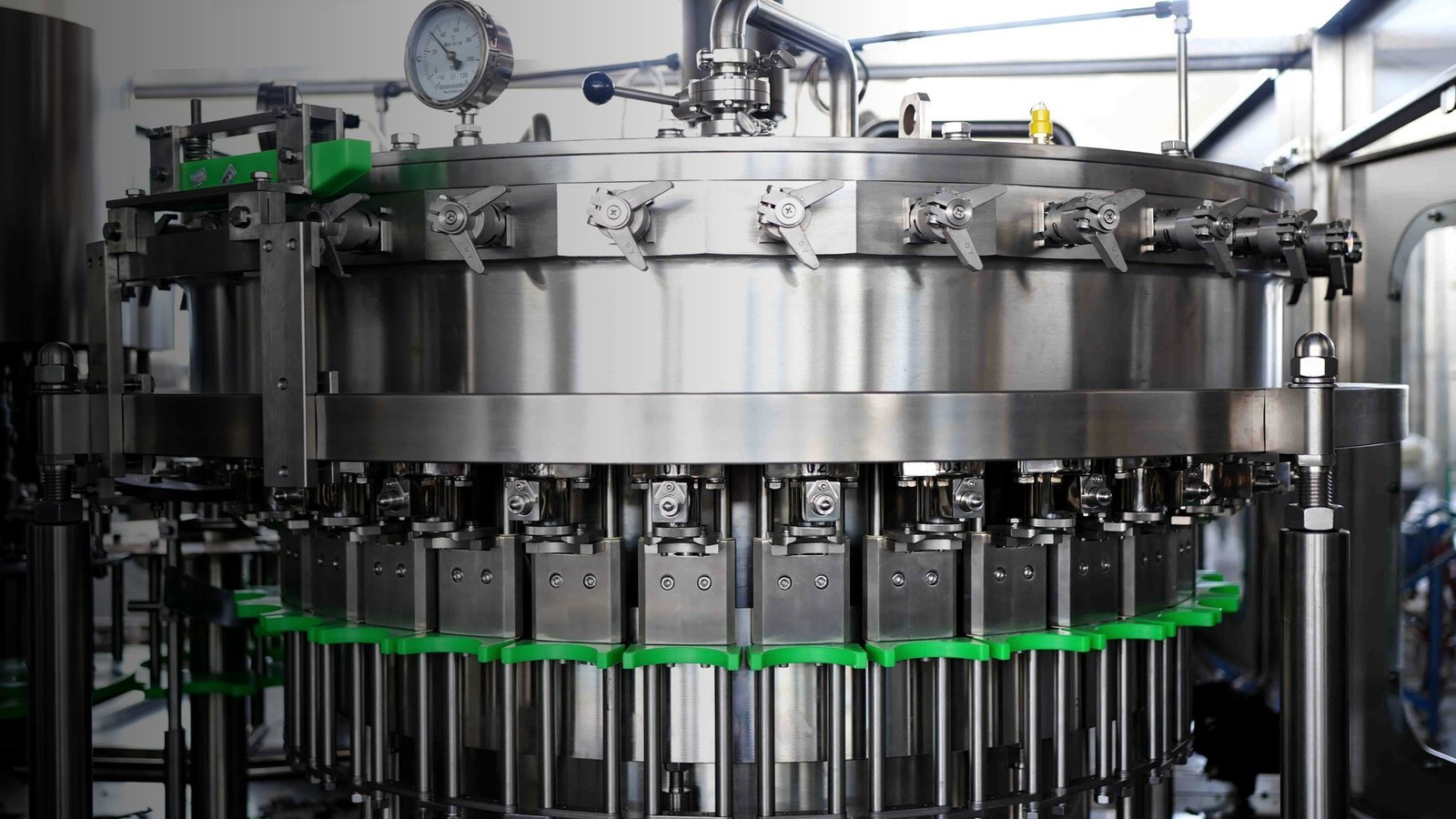
Start with the incoming bottle condition
| Incoming containers | What to establish | Effect on the equipment review |
|---|---|---|
| New PET bottles from on-site blowing | Transfer arrangement, exposure between machines and package requirements | Review preparation within the integrated process; do not add a separate rinser solely because it appears in a generic line diagram. |
| Purchased PET or one-way glass | Storage, transport, unpacking and representative incoming condition | Review handling and removal of expected loose contamination using production-representative samples. |
| Returnable bottles | Previous use, soil, damage and inspection/rejection requirements | Plan a dedicated returnable-bottle washing and inspection route; a simple rinser is not a substitute. |
| Containers for a validated hygienic process | Defined process and package treatment requirements | Specify the validated treatment system and transfer boundary; ordinary rinsing does not establish sterile containers. |
The actual contamination and package condition should determine the trial. A demonstration with clean, hand-selected bottles gives little evidence about the delivered packaging supply.
Compare air rinsing, liquid rinsing and process-specific treatment
| Option to evaluate | Equipment questions | Tradeoff to resolve |
|---|---|---|
| Air treatment with particle removal | Air quality at point of use, nozzle alignment, extraction/collection and monitoring | Avoid added liquid, but prove removal for the expected particles and bottle geometry. Air pressure alone is not proof of cleaning. |
| Liquid rinsing | Medium quality, spray pattern, contact sequence, drainage and collection | Define acceptable residual liquid and the water/drainage boundary. Do not assume all bottles drain equally. |
| Multi-stage or chemical treatment | Separate circuits, materials compatibility, process control and verification requirements | Requires a defined and validated process; no universal chemical concentration or contact time applies to all projects. |
Supplier designs can use different media and different numbers of treatment circuits. Ask which configuration is actually proposed. Do not treat air, water and disinfectant as interchangeable settings on every rinser.
Match the machine to the bottle and filling interface
Confirm the full bottle drawing: neck finish, support ring where used, body diameter, height, mass and material. Rotary designs may invert containers using neck or body handling; the proposed gripping and transfer arrangement must fit the package. Review lightweight containers, unusual shoulders and tall bottles with actual samples.
A standalone machine needs defined infeed and discharge conveyors, sensors and stop/restart communication. An integrated rinser shares coordinated transfers with the filler. Compare usable access for cleaning, nozzle checks, format changes and maintenance, as well as the footprint.
Bottle guides, transfer stars and grippers are not the same thing as a change in rinse program. Ask for a changeover list that separates physical parts from settings and records the confirmed formats.
Write a measurable utility and drainage schedule
- List each medium at the machine connection, including required quality, supply conditions and normal/peak demand from the proposed supplier.
- State whether filtration, air treatment, pumps, tanks, recovery circuits and discharge piping are supplied with the machine.
- Identify drains and reject/waste collection separately from the beverage product circuit.
- If reuse is proposed, document the treatment and quality-control boundary; do not assume recovered liquid can be reused without review.
- Record the response to loss of medium, blocked discharge or a bottle-handling fault.
No generic consumption value is assigned here. Nozzle arrangement, duty cycle, number of stages and the operating program determine the demand. Use the factory utility schedule to compare supplier connection requirements on a common basis.
Use a trial that answers the actual preparation question
| Trial item | Record | Decision supported |
|---|---|---|
| Samples | Package drawing/revision, supplier, lot and incoming condition | Whether the test represents intended production. |
| Treatment | Selected medium, program, operating conditions and measurement method | Whether the proposed duty has been demonstrated. |
| After treatment | Removal result and residual-liquid check where applicable | Whether the agreed package-preparation criteria are met. |
| Line handling | Damage, jams, rejects, format change and stop/restart behavior | Whether the rinser can deliver containers consistently to the filler. |
Agree the criteria and responsible review before the trial. Where microbiological performance is required, suitable process validation must establish it; visible cleanliness or a dry bottle is not enough. Include the result, open deviations and final settings in the handover record.
Send an RFQ that identifies the treatment duty
Provide bottle drawings and samples, incoming storage/transport conditions, beverage and hygiene route, output by format, preferred installation arrangement, available media, drainage plan and the filler inlet details. State whether the project is a new line or a replacement within existing equipment.
The scope review can then compare the rinser, format parts, treatment circuits, utilities, conveyors, controls, commissioning and test work. Use the equipment scope builder to separate supplied items from buyer connections.
Frequently asked questions
Is air rinsing always better than water rinsing?
No. The choice depends on the incoming container, contamination to remove, product process, residual-liquid limits and available utilities. Request a representative trial of the proposed method.
Can an automatic rinser wash returned beverage bottles?
A simple rinser should not be assumed to remove the soil found in returned bottles. Returnable containers need a defined inspection and washing process, with rejection of unsuitable bottles.
Does rinsing make a bottle sterile?
Ordinary rinsing does not establish sterility. Any required microbiological result needs a suitable validated process and controlled transfer to filling.
Continue your equipment selection
Planning guide from Allot Tech (Suzhou) Co., Ltd. Updated 21 September 2026.