 China Beverage Machinery
LanguageEnglish
Buyer decision guide
Monoblock vs Separate Filling Machines: Integration Guide
A monoblock coordinates bottle rinsing, filling and capping within an integrated arrangement. Separate machines connect these duties through defined transfer and control interfaces. Choose by the product, package range and project constraints: neither layout is automatically the better investment.
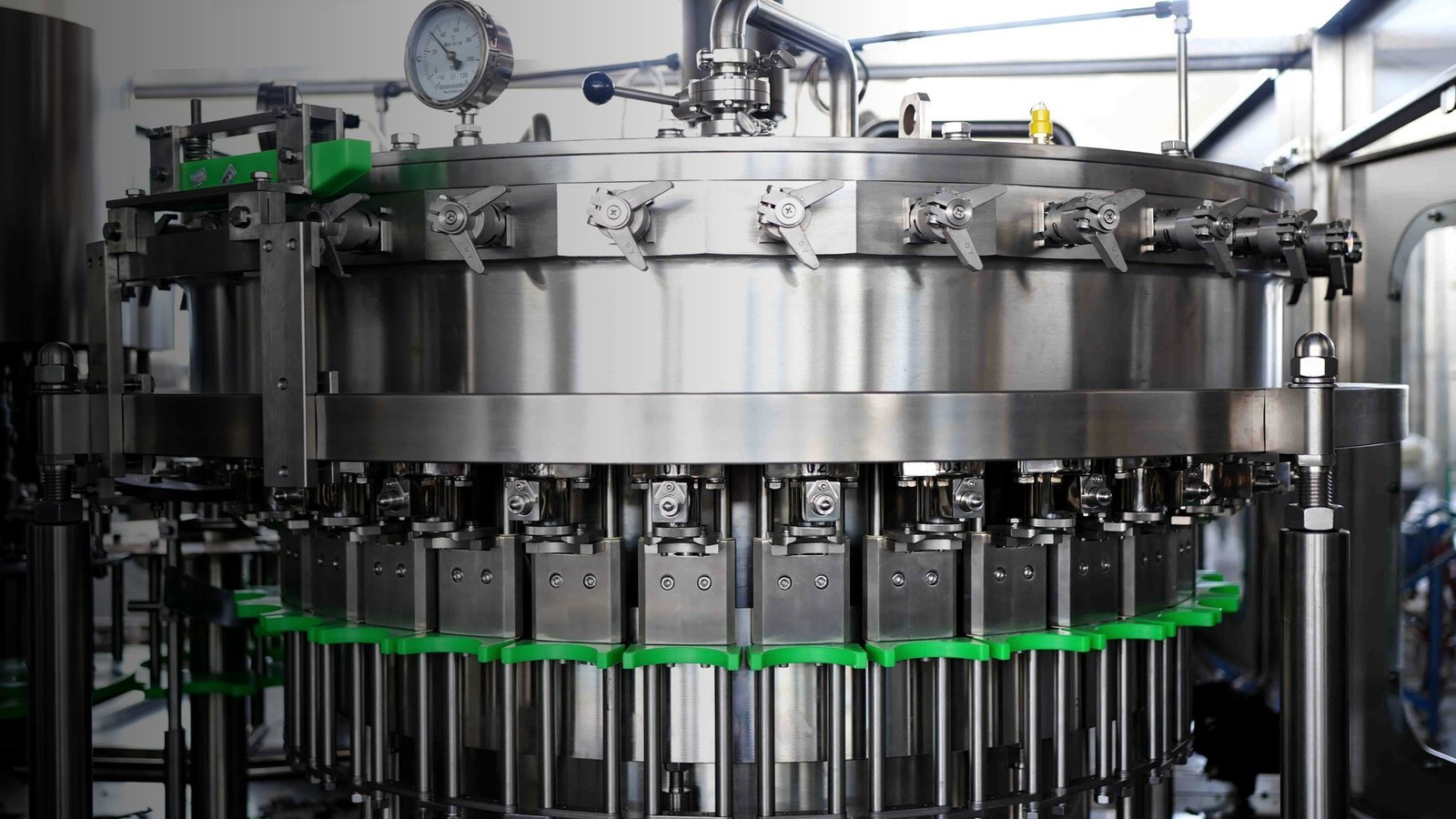
Compare the operating differences
| Decision | Monoblock arrangement | Separate machines |
|---|---|---|
| Container transfer | Coordinated transfers within the proposed block; review access and handling for every format. | More machine-to-machine interfaces to specify, including conveyors, sensors and bottle stability. |
| Open-container interval | Can shorten transfer between preparation, filling and closing; the hygiene design still needs review. | Transfer protection and permissible hold conditions need explicit attention. |
| Maintenance and replacement | Shared access, controls and transfer geometry can couple changes across functions. | Individual replacement may be practical if the retained interfaces remain compatible. |
| Format change | Matched change parts and settings must be organized for the whole block. | Each machine and connecting transfer must be changed and verified in sequence. |
| Accumulation | Do not assume the block contains usable buffer capacity between its operations. | Potential buffer locations depend on container condition and process; open filled bottles are not a default buffer. |
| Footprint and cost | Compare the complete operating envelope and scope, not only the base machine outline. | Include interconnecting conveyors, guarding, controls and installation in the comparison. |
An integrated layout does not by itself establish aseptic operation, a higher saleable output or a lower installed cost. A separate layout does not by itself make every machine independently replaceable. Ask for the actual design and boundary.
Use the project situation to narrow the choice
| Project case | Useful starting point | Evidence that could change the choice |
|---|---|---|
| New line with a defined package family | Compare a coordinated monoblock against a complete separate-machine proposal. | Confirmed package range, process design, service access, installation scope and tested output. |
| Replace one weak machine in an existing line | Evaluate keeping serviceable adjacent equipment. | Existing transfer dimensions, control compatibility, available support and the cost of modifying interfaces. |
| Frequent changes across different bottle or closure families | Review the complete changeover sequence for both layouts. | A demonstrated format change, tooling list and measured recovery to accepted production. |
| Phased expansion | Price the launch duty and expansion interfaces separately. | Whether later equipment can actually connect without replacing major transfers, controls or utilities. |
Start with the 3-in-1 machine configuration when the main decision is the filling process itself. This page addresses the integration arrangement after the product and package requirements are understood.
Distinguish a buffer from an output guarantee
A buffer can absorb a short interruption only where the container condition and process permit it. The usable capacity, actual flow direction and stop/restart logic matter more than the conveyor length on a drawing.
Illustrative arithmetic: 600 accepted, closed bottles of usable accumulation at a flow of 6,000 bottles/hour represent 6 minutes of flow if the receiving machine stops completely while the sender continues. If both continue at different rates, use their rate difference to calculate how quickly the buffer fills. This is a buffer calculation, not permission to hold an open product or a guarantee that the line will recover without loss.
For each proposed buffer, identify what stops first, how upstream machines slow or stop, and how production resumes. Product return, diversion or rejection during interruptions belongs to the approved process design, not a generic conveyor rule.
Ask for a common interface schedule
- Mechanical: transfer height, bottle support, pitch or conveyor geometry, access and guarding boundaries.
- Process: product supply conditions, treatment-to-fill interval and any required protection of open containers.
- Controls: ready/run/stop signals, speed coordination, faults, blockage and starvation response.
- Utilities: connection points, normal/peak duty and who supplies local distribution.
- Changeover: part identifiers, adjustments, recipes, tools and verification steps.
- Responsibility: who designs, supplies, installs and tests each connection.
For a retrofit, provide current equipment identification, drawings and control information before treating retained machines as compatible. Request a written list of adaptations and unsupported items.
Compare installed scope and operating work
Put both proposals on the same product-and-package matrix and output basis. Compare machines, transfers, guarding, cap feed, utility connections, installation, test materials, training and spare parts. Record what is buyer-supplied and who resolves an interface problem.
Then review operating work: cleaning access, routine checks, changeover, fault recovery and maintenance. The lowest base-machine price may omit work needed for the installed line; an integrated quotation may also contain modules the project does not need. Use the supply-scope builder to normalize the boundary without inventing prices.
Make the acceptance trial compare both arrangements fairly
- Use the same package revisions, beverage/test medium, target duty and measurement period.
- Record accepted bottles at the agreed boundary, rejects and stops, including the cause of each stop.
- Demonstrate a representative changeover and define when the changeover timer starts and ends.
- Demonstrate agreed starvation, blockage, low-cap and restart scenarios through the supplier-controlled test procedure.
- Walk the maintenance and cleaning access envelope with the proposed final layout.
- Record remaining site tests and the owner of each unresolved interface.
A factory test may not contain the complete upstream or downstream line. The report should state what was connected, what was simulated and what must be verified on site. Keep that distinction when comparing supplier evidence.
Frequently asked questions
Is a monoblock always more compact?
It can reduce inter-machine transfers, but compare the complete installed footprint with operator access, cleaning, maintenance, cap supply and adjacent conveyors included.
Will separate machines prevent a whole-line stop?
Not necessarily. Stops still propagate through product flow and controls. Any benefit from accumulation depends on where it is allowed, usable buffer capacity and the operating logic.
Can an old capper be kept with a new filler?
Possibly, after reviewing package compatibility, transfer geometry, output, controls, hygiene and support. Include the adaptation and acceptance work explicitly in the scope.
Continue your equipment selection
Planning guide from Allot Tech (Suzhou) Co., Ltd. Updated 21 September 2026.