 China Beverage Machinery
LanguageEnglish
Filling Monoblock Selection
3-in-1 Bottle Filling Machine: Rinser, Filler and Capper
A 3-in-1 bottle filling machine combines rinsing, filling and capping on one coordinated platform. Choose the filling process for the beverage first, then match the bottle, closure and required output. The three operations do not make every monoblock suitable for every drink.
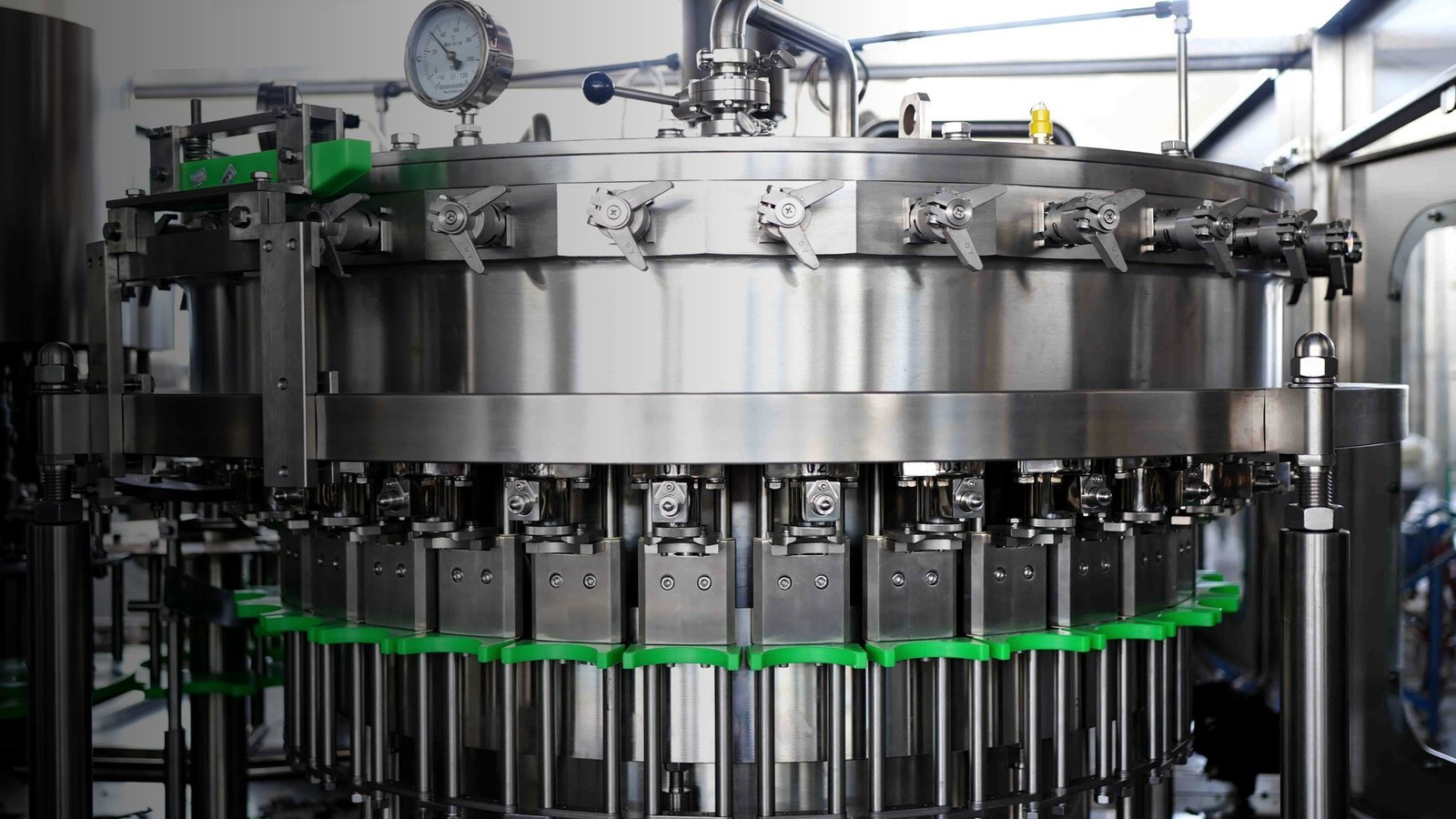
Choose the monoblock configuration for the beverage
For a new line, compare three process families below. For a replacement machine, also check the existing bottle infeed, discharge height and line-control signals. Allot Tech (Suzhou) Co., Ltd. supports equipment sourcing and configuration review against that project basis.
| Process family | Configuration to discuss | Decision that changes the proposal |
|---|---|---|
| Still water | Rinser, water filler and compatible screw capper | Source and condition of empty bottles; fill measurement method; neck and closure drawing. |
| Hot-filled juice or tea | Thermal-process-compatible product path, filler and capper | Product specification, validated process, heat-compatible package, hold/return arrangement and cooling boundary. |
| Carbonated beverage | Pressure-filling configuration and compatible closure system | Product temperature, carbonation, foam behavior and pressure-compatible bottle/closure. |
| Multiple beverage families | A specifically reviewed shared platform or separate machines | Written compatibility by SKU, change parts, process limits and cleaning/changeover work; a generic multi-purpose claim is insufficient. |
A rinse-filling-capping machine and a blow-fill-cap block combine different operations. Ask the quotation to name each operation explicitly. A bottle rinser is also different from a returnable-bottle washer.
What belongs to the machine and what belongs to the line
| Boundary | Describe in the quotation | Avoid a missing interface |
|---|---|---|
| Empty-bottle inlet | Container handling, guides, transfer parts and inlet conditions | Identify whether the upstream conveyor, unscrambler or blower connection is included. |
| Rinsing | Medium circuits, nozzles, drainage and monitoring | Identify who supplies and conditions the rinse medium and who connects the drain. |
| Filling | Product inlet, filling method, supply condition and cleaning connections | Assign product tank, pump, thermal/pressure control and CIP return where required. |
| Capping | Application heads, cap feed interface and format parts | List the elevator/sorter, treatment if needed, chute and low-cap response separately. |
| Discharge | Transfer to the next conveyor and filled-bottle condition | Agree inspection, reject handling, coding, labeling and packing responsibilities. |
The normal 3-in-1 scope does not by itself include water treatment, beverage preparation, PET blowing, labeling or final packing. Use the supply-scope builder to mark each module as included, retained or optional.
Specify useful output instead of selecting by head count
Rinsing grippers, filling valves and capping heads have different cycle duties. Their counts describe a machine arrangement; they are not a reliable conversion formula for bottles per hour. Obtain the proposed running speed for each actual product, bottle size and closure, together with the conditions of the test.
Illustrative comparison: a filler operating at 6,000 bottles/hour feeds a packer producing 6-bottle packs at 15 packs/minute. That packing rate corresponds to 5,400 bottles/hour. During continuous running, the 600-bottle/hour difference builds accumulation until upstream production must slow or stop. This arithmetic identifies a line-balance question; it does not predict saleable output or recommend a machine model.
- State required saleable output and scheduled production time separately from running speed.
- List changeovers, cleaning periods and normal planned stops, without deducting the same loss twice.
- Ask which SKU limits the proposed configuration and how that limit was established.
- Use the capacity calculator for the planning arithmetic, then agree a package-specific test.
Define the complete bottle-and-cap set before tooling
Create one row per launch SKU with bottle material, volume, body dimensions, neck-finish drawing, closure revision, product condition and requested output. A common nominal cap diameter does not establish a common thread, seal or tamper-band interface.
Identify the actual change parts: inlet guides, starwheels, rinse grippers, filling centering parts, bottle supports and cap application tooling as applicable. Ask which adjustments are recipe-controlled and which need physical parts, tools or manual measurements. The quotation should include change-part identification and storage, not simply say “multiple bottle sizes”.
Keep future formats in a separate option list. See the bottle and closure compatibility guide for the drawing and sample evidence needed before release.
Agree the trial and handover record
- Identify bottle, closure and product/test-liquid revisions. Record where a substitute test liquid limits the conclusion.
- Demonstrate steady operation, short stops, controlled restart and the agreed format change.
- Record fill results by station where practical; include rejects and the measurement method rather than only visual level.
- Check cap presence, seating and the agreed closure tests; report the applicable package specification.
- Document inlet starvation, discharge blockage, low-cap alarms and reject confirmation with the equipment supplier.
- Record unresolved deviations, manuals, drawings, settings, spare parts and responsibility for site acceptance.
A factory trial demonstrates the tested configuration. Site utilities, upstream process conditions and downstream equipment still need to be checked during commissioning. Compare integration choices in monoblock versus separate machines.
Why are bottle fill levels inconsistent or drifting during production?
First determine whether the deviation follows one filling valve, one bottle format, a product condition or the whole carousel. Weight-based samples, product temperature, supply pressure, bowl conditions and station identity are more useful than visual level comparisons alone.
What you may be seeing
- One or several filling positions repeatedly underfill or overfill
- Fill level changes as line speed or tank level changes
- Foam makes visual level unstable
- The problem appears only after a product or bottle changeover
Check these causes first
- Unstable product temperature, inlet pressure or filler-bowl condition
- Fouled, worn or incorrectly assembled filling-valve components
- Bottle neck, internal volume or vent-tube relationship varies
- Recipe, level probe or filling-method settings do not match the product
Record before changing settings
- Identify samples by filler valve or station instead of mixing all bottles
- Weigh controlled samples and record product density and temperature
- Trend inlet pressure, bowl level and stop/restart conditions
- Compare current bottle and cap drawings with the approved trial sample
Email the details needed for a technical scope review
We can help separate product, package, valve and control questions so an equipment supplier receives a testable diagnostic brief rather than a general complaint about inaccurate filling.
- Beverage properties and filling temperature
- Bottle drawing, volume and neck finish
- Target and measured fill tolerance
- Filler model, valve count and running speed
- Station-based sample results and videos
Keep guards, interlocks and lockout procedures in service. Remote review can organize evidence and supplier questions, but site-specific diagnosis, food-safety validation and equipment work must be performed by competent responsible personnel.
Frequently asked questions
Does 3-in-1 mean the whole bottling line is included?
No. It identifies rinsing, filling and capping. Product preparation, bottle supply, conveyors, inspection, labeling, packing and utilities need their own written scope.
Can the same machine fill water, juice and carbonated drinks?
Only if the specific configuration has been reviewed for every product and package. Filling pressure, thermal process, product path, closure and cleaning requirements can differ substantially.
Can I choose capacity from the number of filling valves?
No. Valve count alone does not establish useful output. Request running speed and acceptance conditions for the actual beverage, bottle and cap, then check the rest of the line.
Continue your equipment selection
Planning guide from Allot Tech (Suzhou) Co., Ltd. Updated 21 September 2026.