 China Beverage Machinery
LanguageEnglish
Reusable bottle water plant
5 Gallon Water Filling Line: Washing, Filling and Output
Plan a 5 gallon water filling line around the returned bottles as well as the finished water. Receiving inspection, cap removal, outside cleaning, inside washing, filling, capping and dispatch need a defined flow with clear separation between dirty returns and cleaned bottles.
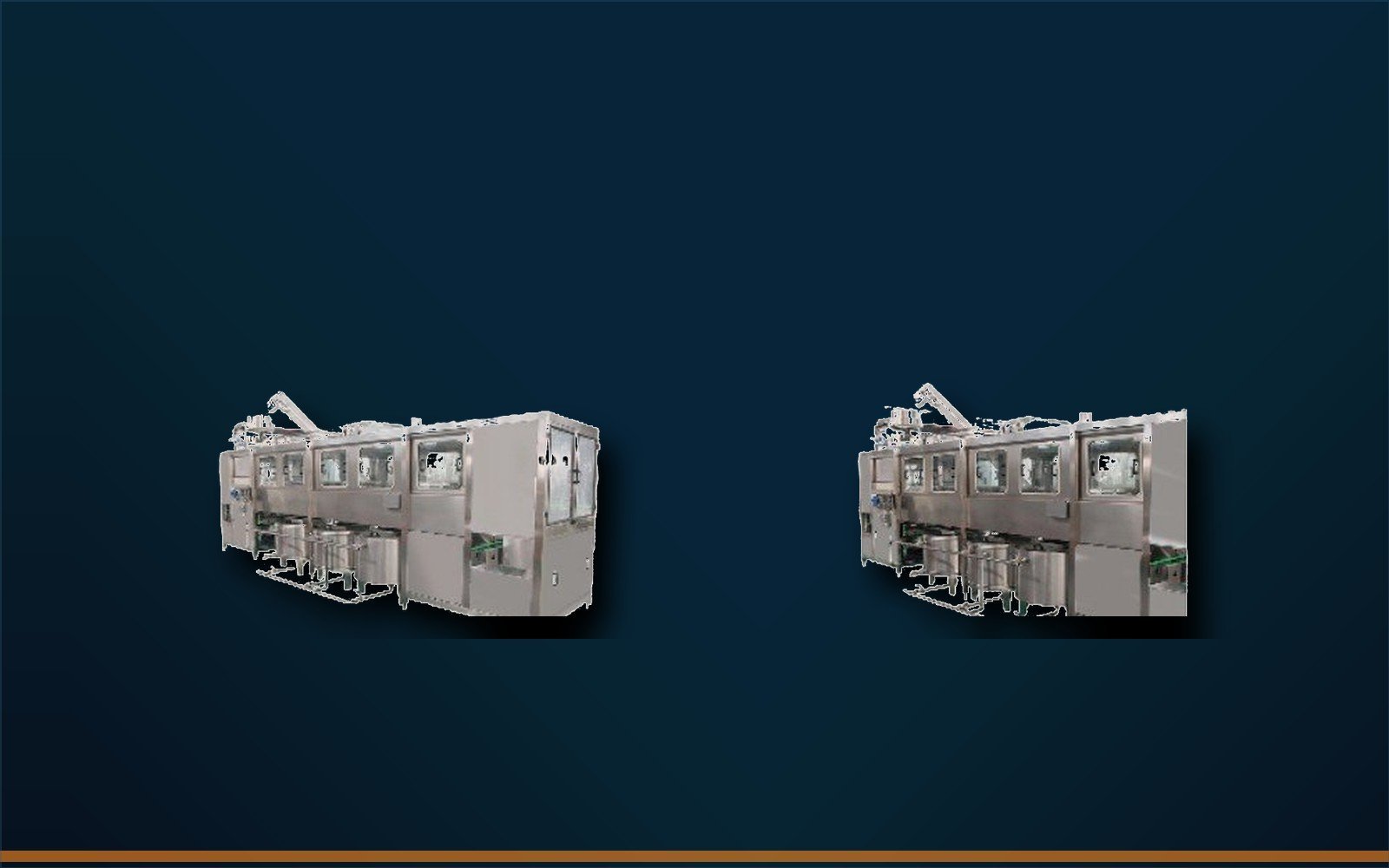
Define the route from returned bottle to dispatch
First decide whether the plant will handle returnable bottles, new bottles or both. Incoming bottle condition affects the preparation process and staffing. Filling equipment cannot compensate for a bottle that should have been rejected before washing.
| Stage | Decision to settle |
|---|---|
| Receiving and inspection | Where bottles are sorted, which defects or contamination histories trigger rejection, and how rejected bottles are kept out of the feed. |
| Cap removal and outside cleaning | Whether equipment or operators remove caps, labels and external soil, and how debris is collected. |
| Internal washing and rinsing | The validated cleaning sequence, chemical compatibility, contact conditions, monitoring and final-rinse requirements. |
| Transfer, filling and capping | How cleaned bottle openings and closures are protected, and how filling and closing quality are checked. |
| Inspection and dispatch | Leak and fill checks, identification, optional sleeving/bagging, and the agreed rack or delivery handling arrangement. |
A semi-automatic arrangement can involve manual transfers that an automatic line handles mechanically. Compare the actual operator tasks, accepted output and plant flow rather than assuming the automation label describes the whole installation.
Approve each returnable-bottle format
The labels 3 gallon, 5 gallon, 19L and 20L do not establish mechanical interchangeability. Obtain actual drawings and samples, including permitted variation from repeated use. A nominal volume change may affect guides, washing positions, bottle support, filling and cap application.
| Bottle or closure input | What to confirm |
|---|---|
| Body and neck geometry | Diameter, total height, neck finish and contact points used by handling equipment. |
| Material and reuse condition | Compatibility with the specified cleaning process and the bottle supplier’s rejection criteria. |
| Handle, base and surface details | Transfer stability, brushing access, support and potential wear points. |
| Closure and seal | Approved cap type, feed arrangement, application method and inspection criteria. |
| Format change | Parts, adjustment points, recipes, approved samples and demonstrated change procedure. |
Keep bottles of uncertain origin or condition in a separate review stream. Include a practical method for operators to remove a nonconforming bottle without allowing it to rejoin the accepted flow.
Calculate product water separately from washing water
For an illustrative requirement of 300 accepted 19L bottles per hour, saleable product water is 300 × 19 = 5,700 liters per hour. Six defined production hours would yield 1,800 bottles and 34,200 liters before any additional losses not already included in the accepted-output assumption. This is a planning example, not a machine rating.
Washing water, final rinse, treatment reject streams and cleaning demand are separate loads. Build a water balance showing which uses occur together and which water quality each requires. Do not add a guessed universal washing allowance to the filler capacity.
- Request washer output under the specified sequence and contact conditions, using representative returned bottles.
- Do not shorten a validated wash cycle merely to match a desired filler rate; review washer capacity or operating arrangement instead.
- Check treated-water storage and delivery against peak demand and the treatment system’s actual production schedule.
- Compare cap feeding, inspection and full-bottle handling at the same accepted bottle rate.
- If an output factor is used, list the losses it already includes before applying any further deduction.
Keep dirty returns and cleaned bottles on defined paths
Mark receiving, rejected-bottle holding, outside cleaning, internal washing and the protected filling/closing area on the layout. Check the movement of staff, caps, chemicals, waste and finished bottles as well as the conveyor route. A short conveyor is not automatically a workable plant flow.
List drainage points, cleaning access, ventilation where required, chemical storage and service connections for review by the responsible site and process specialists. Full bottles also create a handling task: specify the transfer height, route, equipment and dispatch pattern instead of leaving lifting and stacking arrangements undefined.
For a retrofit, identify the exact handoff from the existing washer or filler and which contractor provides interlocks, conveyors and commissioning support. Include utilities and site preparation in the responsibility matrix.
Accept the washer and filler with documented evidence
Agree the representative bottle conditions, product-water specification, operating rate, trial duration and pass criteria before the test. Washing-process effectiveness and product suitability require the relevant validated checks; a visually clean bottle alone is not a complete release criterion.
- Record bottle and closure references, incoming inspection results and rejection reasons.
- Record the specified washing parameters and required rinse checks using the agreed method.
- Measure accepted filled output, fill quantity, closure integrity and rejects over the defined run.
- Observe safe stop/restart, bottle transfer, drainage and separation of rejected material.
- Hand over cleaning instructions, format settings, operator inspection records and wear-parts identification.
Frequently asked questions
Can a 5 gallon filling line also run 19L and 20L bottles?
Compatibility must be checked against each actual bottle and closure drawing. Nominal volume alone does not establish that the washer, handling parts, filler and capper can run the format.
Does 5,700 liters per hour cover all water demand for 300 bottles per hour?
It covers saleable product water only when each accepted bottle contains 19 liters. Washing, rinsing, treatment losses and cleaning must be calculated separately with their timing and water-quality requirements.
Can the washing cycle be reduced to increase output?
A required cleaning sequence should not be shortened without process validation. Compare washer capacity, bottle preparation and line balance under the approved cleaning conditions.
Continue your project planning
Planning guide from Allot Tech (Suzhou) Co., Ltd. Updated 14 September 2026.