 China Beverage Machinery
LanguageEnglish
Hot Fill PET Solution
Hot Fill PET Bottle Line for Juice and Tea
A hot-fill PET line is one coordinated thermal package: validated product heating, hygienic transfer, filler supply, heat-resistant bottle, closure, post-fill hold where required and controlled cooling. Each element must be sized around the same process and output.
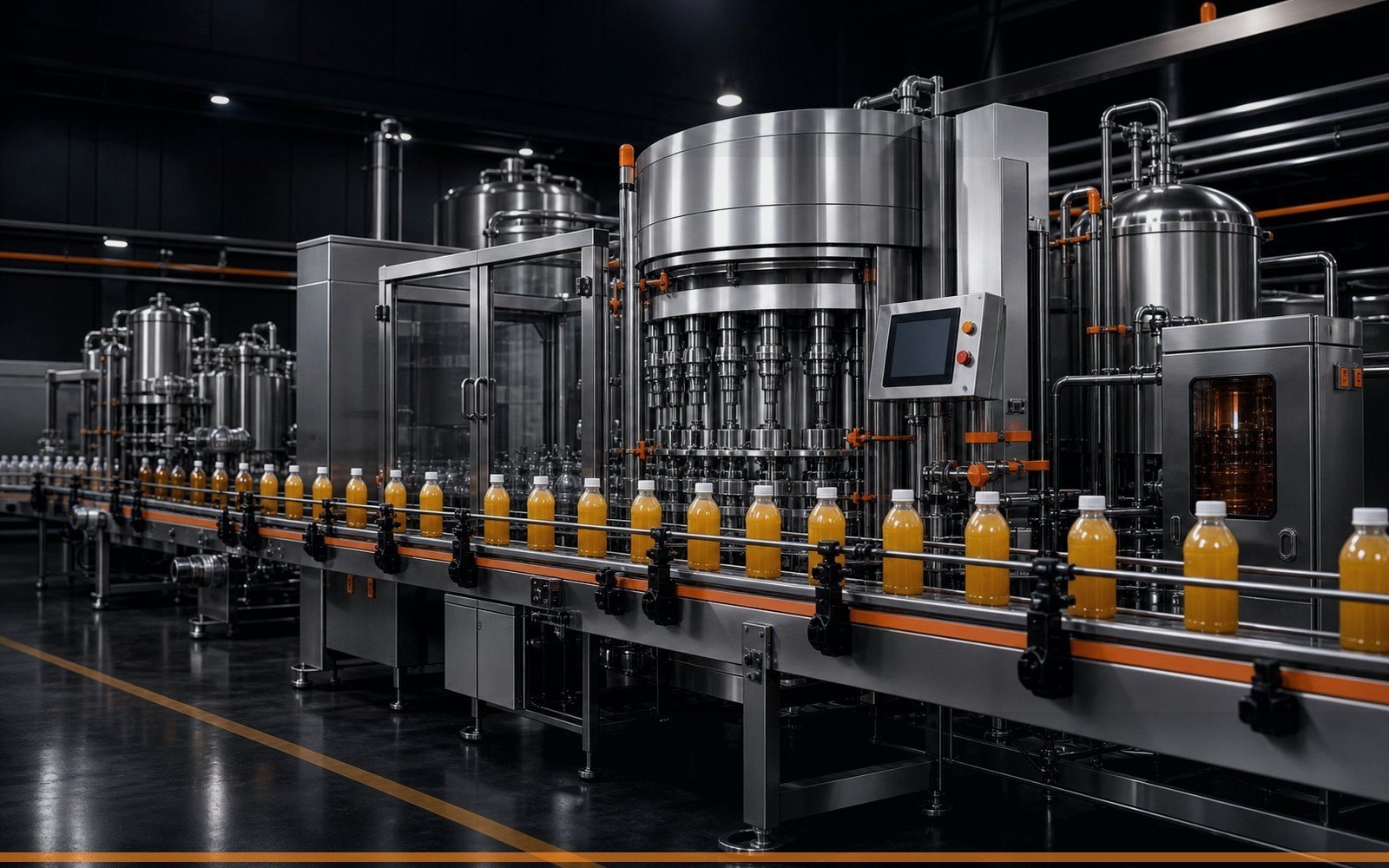
Plan the product path before selecting isolated machines
The product technologist or process authority should define temperature and hold conditions. Equipment engineering then controls heating, diversion, buffer, filling, closure, residence time and cooling without inventing shelf-life claims.
Bottle panel behavior, vacuum compensation, neck finish, cap seal and cooling profile should be checked together. A standard cold-fill water bottle should not be assumed suitable for hot fill.
Modules to define in the quotation
Each proposal should identify included equipment, options, buyer-supplied items, utility battery limits, controls interfaces and acceptance responsibility.
Thermal treatment
Define product flow, target temperature, hold, diversion, recovery and recording from the validated process.
Hygienic filler supply
Pipe routes, buffer time, circulation and start-stop controls should keep product inside the confirmed filling window.
Heat-resistant PET package
Provide bottle, preform, neck, cap and vacuum-panel data, including supplier tolerances and representative samples.
Hot filling and capping
Match filling valves, level or volume, headspace, cap application and closure condition to the product and bottle.
Post-fill hold and cooling
Coordinate inversion when required, residence time, cooling zones, water quality and discharge temperature.
Label and pack interface
Apply labels and packs only after bottle temperature, surface condition and geometry are stable.
Information that changes the line configuration
Use one structured data set for every supplier so quotations can be compared on the same product, package, capacity and factory duty.
| Decision area | What the buyer should provide | Engineering impact |
|---|---|---|
| Validated process | Heating, hold, filling, closure and cooling conditions. | Defines the complete thermal line. |
| Product | Acidity, solids, viscosity, particles and heat response. | Defines heat exchanger and filler duty. |
| PET package | Preform, bottle, cap, panel and heat-resistance data. | Defines blowing, filling and cooling compatibility. |
| Output | Saleable output by bottle size and pack. | Defines heater, filler and tunnel balance. |
| Utilities | Heating, cooling water, power, air, water and drainage. | Defines utility duty and recovery. |
| Acceptance | Temperature, hold, fill, cap, bottle shape and cooling checks. | Defines measurable testing. |
Resolve these questions before freezing the equipment list
Hot fill versus ultra-clean or aseptic
Compare validated product needs, package, operating complexity, utilities, flexibility and distribution rather than focusing on equipment labels.
Bottle design responsibility
Clarify who validates preform, bottle, cap, vacuum behavior and distribution performance under the selected thermal route.
Cooling tunnel duty
Use bottle entry temperature, line speed, package mass, ambient conditions and desired discharge temperature.
Product changeover
Color, pulp, flavor and allergen sequences affect heater, filler and cooling-tunnel cleaning and downtime.
Send these project inputs
- Validated product process
- Recipe families and physical properties
- PET preform, bottle and cap drawings
- Target output by SKU
- Cooling and utility conditions
- Label and pack materials
- Factory layout and drainage
- FAT, process records and documentation needs
Verify these handover points
- Critical temperature and hold records verified
- Filler supply during starts and stops checked
- Fill level and cap results measured
- Bottle shape and panel performance observed
- Cooling profile and label condition recorded
- Recipes, P&IDs and process limits delivered
Questions buyers ask before quotation
Can ordinary PET bottles be hot filled?
The bottle and closure must be designed and validated for the selected temperature, vacuum and distribution conditions.
Is a cooling tunnel part of the hot-fill line?
Usually controlled cooling is part of the coordinated package, but the exact design follows the validated process and bottle.
Can hot fill handle pulp beverages?
It may, but particle size, passages, heat transfer, filler valves and cleaning require representative-product review.
What should the FAT record?
Record critical temperature and hold, output, fill, cap, bottle condition, cooling, rejects, stops and documentation.
Related equipment and buyer resources
Turn product and factory data into a comparable line scope
Send beverage type, validated process, container drawings, saleable output, utilities, factory dimensions, destination, budget range and purchase timeline.