 China Beverage Machinery
LanguageEnglish
Pulp and Particle Beverage
Pulp Juice and Particle Beverage Production Line
Pulp beverages require the process room and filler to handle particles without blocking, separating or damaging the product. Particle size, concentration, density and distribution must be confirmed with representative material before equipment passages are fixed.
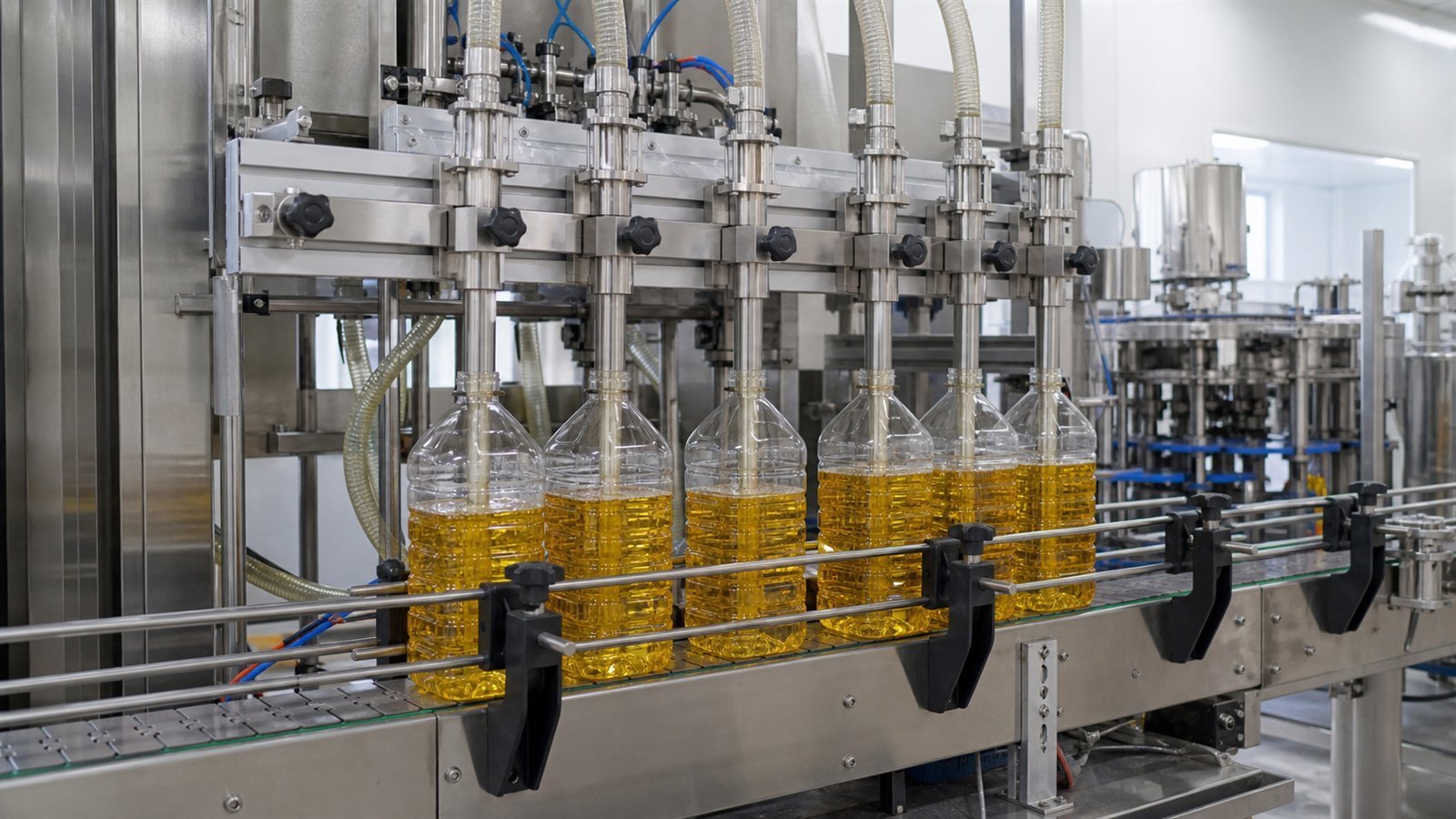
Plan the product path before selecting isolated machines
A generic juice quotation can miss pulp-sensitive pumps, valves, heat exchangers, tank agitation and filling passages. The product matrix should state both the liquid phase and the solid phase for every SKU.
Some products use a single mixed stream while others dose particles separately. These approaches create different controls, sanitation, filling consistency and acceptance methods.
Modules to define in the quotation
Each proposal should identify included equipment, options, buyer-supplied items, utility battery limits, controls interfaces and acceptance responsibility.
Pulp specification
Provide particle dimensions, shape, concentration, density, fragility and storage condition. Photographs alone are not enough for engineering.
Pulp preparation
Define thawing, draining, washing, screening or conditioning steps and the acceptable time before blending.
Gentle mixing
Tank and agitator selection should maintain distribution without unnecessary particle damage, vortexing or sedimentation.
Particle-compatible transfer
Pumps, bends, valves, instruments and heat exchangers must be reviewed for the confirmed particle envelope and cleaning method.
Filling method
Filling passages, valve timing and agitation or recirculation strategy should support representative product at the required container speed.
CIP and inspection
Solid hold-up points, dead legs, screens and filler passages need defined inspection and cleaning access.
Information that changes the line configuration
Use one structured data set for every supplier so quotations can be compared on the same product, package, capacity and factory duty.
| Decision area | What the buyer should provide | Engineering impact |
|---|---|---|
| Particle envelope | Maximum dimensions, typical distribution, concentration, density and fragility. | Defines all product-contact passages. |
| Liquid phase | Acidity, solids, viscosity, temperature and foaming behavior. | Defines mixing, treatment and filling. |
| Process route | Validated heating, hold, filling and cooling conditions. | Defines thermal and hygienic equipment. |
| Container | Opening, bottle or can geometry, closure and pack format. | Defines filler, transfer and inspection. |
| Output | Saleable output and acceptable distribution variation. | Defines machine speed and test method. |
| Cleaning | Campaign length, product sequence, CIP and manual inspection needs. | Defines cleanability and downtime. |
Resolve these questions before freezing the equipment list
Single-stream versus dual-stream filling
The product concept and consistency target determine whether pulp travels with the liquid or is dosed separately.
Representative product trial
A real product trial is important when particle passage, damage, settling, heat transfer or fill distribution is uncertain.
Line speed versus particle consistency
Higher speed is not useful if particle distribution or closure cleanliness becomes unstable. Acceptance should measure saleable packs.
Inspection and sampling
Define how particle amount, fill level, closure and package cleanliness will be sampled during FAT and production.
Send these project inputs
- Particle dimensions and concentration
- Representative product or samples
- Liquid-phase properties
- Validated treatment and filling route
- Container and closure drawings
- Output and consistency target
- Campaign and cleaning plan
- Acceptance sampling method
Verify these handover points
- Representative product passage test
- Particle damage and distribution sampled
- Heating and transfer stability recorded
- Fill and closure cleanliness checked
- Cleaning access and routes inspected
- Change parts and product limits documented
Questions buyers ask before quotation
Can a standard juice filler handle pulp?
Not necessarily. Particle size, concentration, valves, passages, agitation and cleaning must be reviewed with representative product.
What particle information is needed?
Provide maximum and typical dimensions, shape, concentration, density, fragility, temperature and acceptable distribution in the pack.
Why is an actual product trial useful?
It can reveal settling, breakage, blockage, heat-transfer, filling and cleaning behavior that drawings cannot fully predict.
How should acceptance be measured?
Agree on output plus particle distribution, fill level, closure cleanliness, rejects, stops and cleaning evidence.
Related equipment and buyer resources
Turn product and factory data into a comparable line scope
Send beverage type, validated process, container drawings, saleable output, utilities, factory dimensions, destination, budget range and purchase timeline.