 China Beverage Machinery
LanguageEnglish
Juice and Tea Preparation
Juice Processing Line: Preparation, Thermal Process and Filling Integration
A juice processing line must connect raw materials and recipe preparation to a validated thermal process, hygienic transfer, filling and bottle cooling. Concentrate drinks, pulp beverages, tea and functional products do not share one automatic configuration.
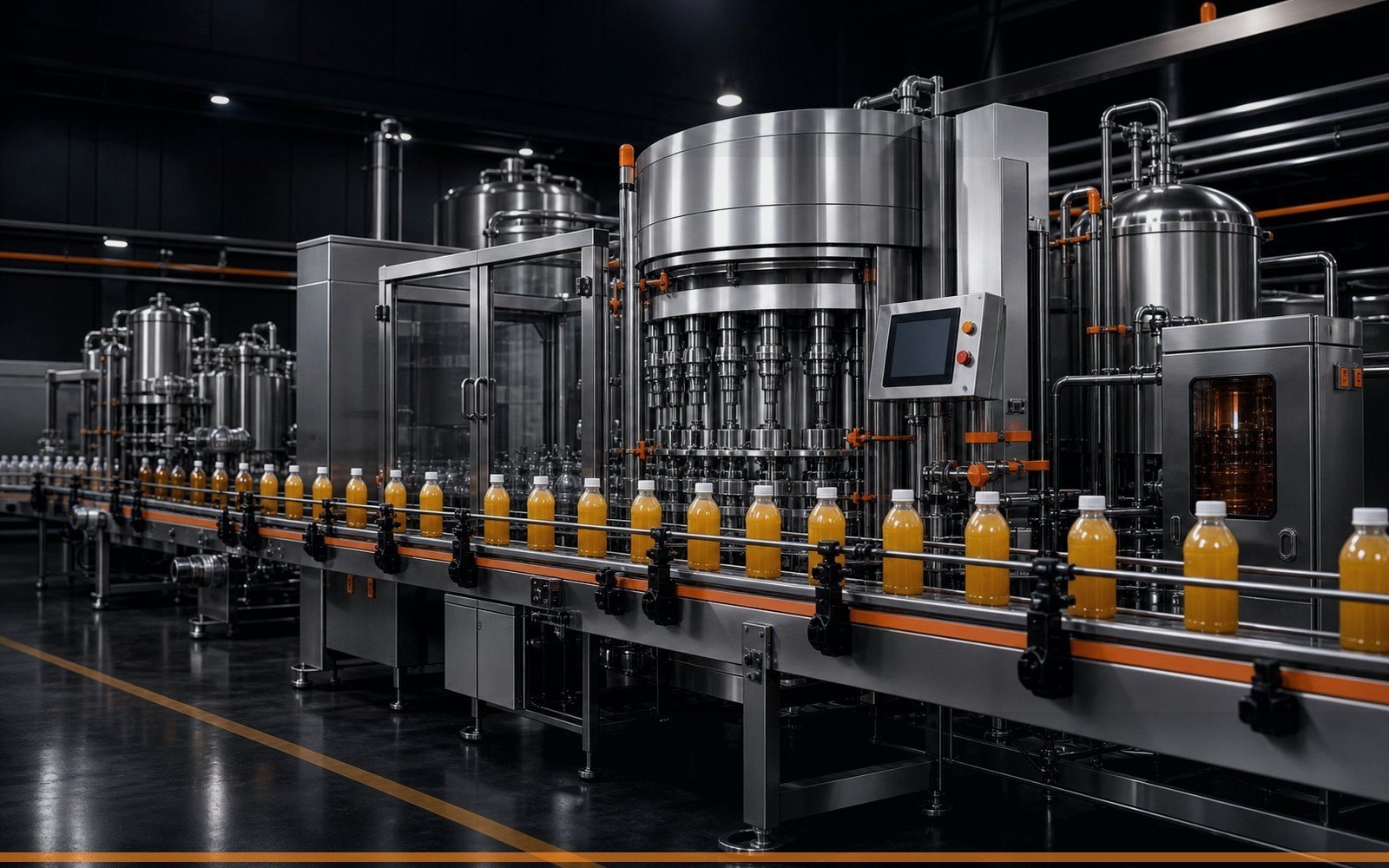
What this equipment must do inside a complete line
The engineering starting point is the product matrix: concentrate or fresh input, pulp or fiber, acidity, viscosity, filling temperature, package and intended shelf-life route. This information determines which preparation, filtration and thermal steps should be evaluated.
For hot-filled products, the process line, filler, bottle, closure, inversion step when required and cooling tunnel form one thermal package. Their capacities and hold times must be coordinated instead of purchased as independent machines.
Concentrate-based drinks
Usually require controlled dissolving, water and concentrate dosing, blending, adjustment and treatment before filling.
Pulp or fiber beverages
Need special review of pumps, valves, heat exchangers, filling valves and cleaning so particles are handled without blockage or damage.
Tea and functional drinks
Extraction or ingredient preparation, oxidation control, filtration and formula sensitivity can change the process sequence.
Modules and interfaces to define before quotation
A useful proposal should state what is included, what is optional and where another supplier or the buyer takes responsibility.
Ingredient preparation
Document concentrate strength, powders, sugar, acids, flavors, pulp and any sensitive additions. The receiving and dosing method should match actual ingredient packaging.
Blending and adjustment
Tank agitation, order of addition, sampling, soluble-solids and acidity checks should be reflected in the batch sequence and operator access.
Filtration and physical treatment
Screening, filtration, deaeration or homogenization are product-specific decisions. Their sanitary design and bypass philosophy must be reviewed.
Heating and holding
The thermal profile must be supplied by the buyer’s process authority. Equipment engineering then addresses heating method, hold section, controls, diversion and recovery.
Filler and bottle interface
Filling temperature, bottle heat resistance, headspace, closure and post-fill handling must be compatible with the validated product route.
Cooling and packing
Cooling should protect package stability and label or pack performance while avoiding uncontrolled residence time or thermal shock.
Information that changes equipment selection
Send engineering inputs in a structured format so suppliers compare the same duty instead of quoting different assumptions.
| Decision area | What to provide | Why it matters |
|---|---|---|
| Product family | Juice drink, nectar, tea, functional beverage or pulp product. | Separates process routes and prevents a generic quotation. |
| Ingredient form | Concentrate, powder, liquid sugar, pulp, extract and package size. | Defines receiving, dosing and dissolving equipment. |
| Physical properties | Solids, acidity, viscosity, particles and foaming behavior. | Changes mixing, pumping, heat transfer and filling. |
| Thermal process | Confirmed heat treatment, hold time, filling condition and cooling target. | Defines heater, hold section, controls and filler interface. |
| Container | PET or glass bottle, closure, label and pack format. | Defines heat resistance, handling and downstream cooling. |
| Cleaning | Product sequence, allergen concerns, soils and validated CIP requirement. | Defines circuit separation, chemicals and changeover duration. |
Decisions buyers should resolve with the supplier
Hot fill, ultra-clean or aseptic
These are different project architectures. The choice depends on product, shelf-life target, package, market and validated process, not on a marketing label.
Pulp handling
Particle size and concentration should be confirmed using representative product. Pumps, valves, heat exchangers and filler passages must be reviewed together.
Cooling tunnel duty
Bottle entry temperature, package material, discharge requirement and actual line speed determine the cooling profile and water circuits.
Batch scheduling
The process room must prepare the next batch without starving the filler while allowing sampling, release, transfer and cleaning.
Send these RFQ inputs
- Recipe families and expected annual SKU matrix
- Ingredient forms, packaging and dosing accuracy needs
- Pulp or particle size and concentration where applicable
- Confirmed thermal and shelf-life process
- Bottle, closure, label and pack drawings
- Required output by bottle size
- Utility conditions and process room dimensions
- CIP, batch reporting and operator training requirements
Verify these points before handover
- Representative product or agreed test medium available
- Batch sequence and ingredient addition demonstrated
- Temperature, flow and diversion functions recorded
- Pulp-sensitive components inspected with actual product when required
- Filler supply and cooling tunnel balance confirmed
- Cleaning recipes, P&IDs and batch records included in handover
Keep the proposal comparable
Ask every supplier to identify equipment scope, utilities, buyer-supplied items, reference packages, controls interfaces, documentation, training, spare parts, installation boundary and acceptance method.
Final configuration depends on confirmed product, container, output, factory and regulatory requirements.
Frequently asked questions
Is a juice processing line the same as a juice filling line?
No. Processing prepares and treats the beverage before filling. A complete project can include ingredient handling, mixing, filtration, thermal treatment, hygienic transfer, filling, cooling, labeling and packing.
Can the same line make juice and tea?
It may be possible, but the formulas, extraction or preparation steps, thermal process, filtration, cleaning and package matrix must be reviewed. Some modules can be shared while others may need dedicated routes.
When is homogenization required?
Homogenization depends on the formulation and desired product stability. It should be confirmed by the product technologist rather than added automatically to every juice project.
What information is needed for a hot-fill quotation?
Provide recipe family, physical properties, thermal process, filling temperature, bottle and cap drawings, output by SKU, cooling requirement, utilities and the intended cleaning schedule.
Continue building the complete line scope
Send product, package, capacity and factory information
Include beverage type, container drawings, target saleable output, utilities, factory dimensions, destination country and purchase timeline. We will organize the equipment scope for quotation.