 China Beverage Machinery
LanguageEnglish
Hot-Fill Line Capacity Planning
5,000 BPH Juice and Tea Filling Line: Process, Equipment and RFQ Guide
Plan a 5,000 BPH juice or tea line around product preparation, thermal process, hygienic transfer, filling temperature, bottle specification and downstream cooling – not the filler nameplate alone.
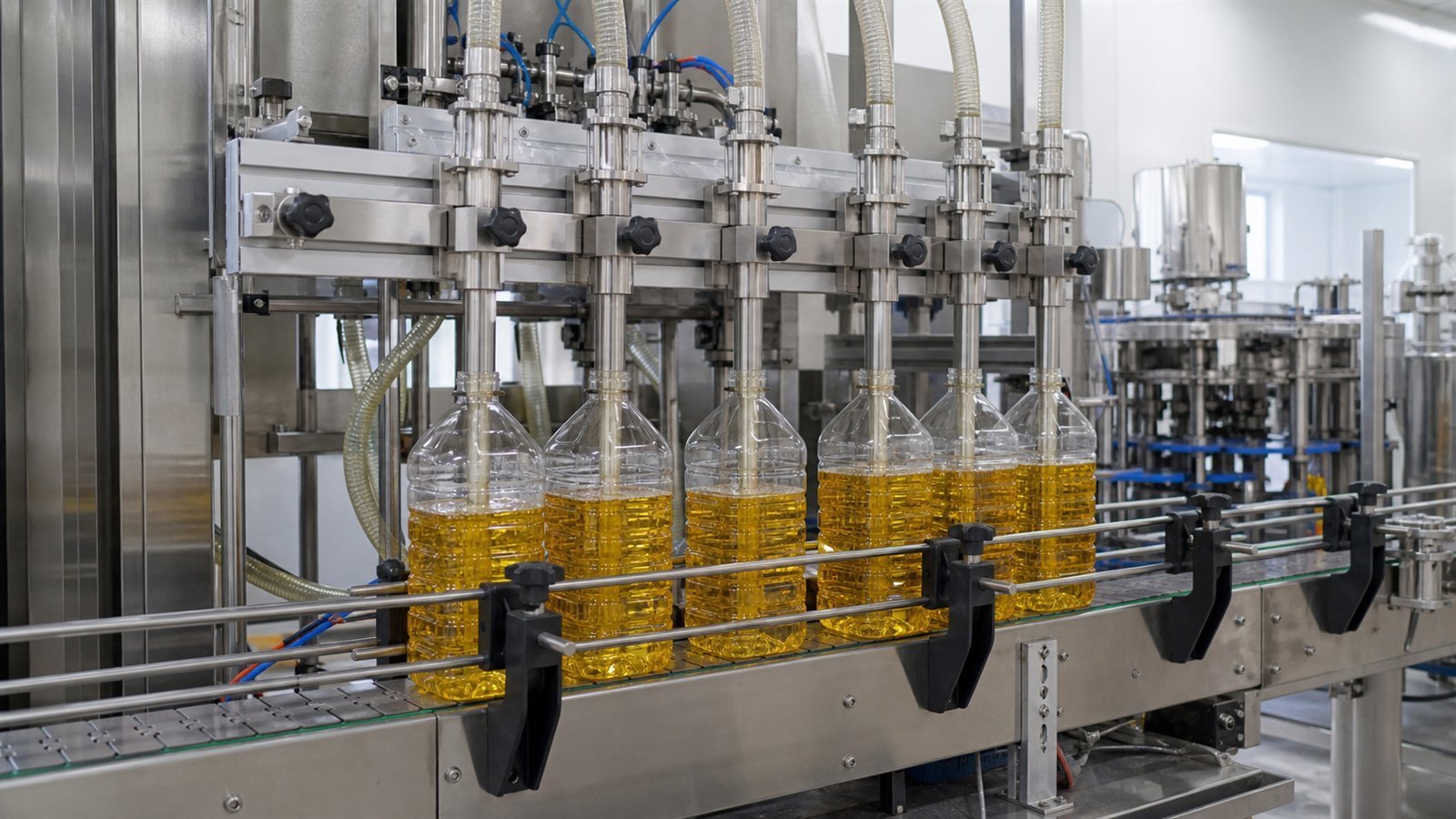
Define the 5,000 BPH Basis Before Selecting Machines
| Input | Why it changes the line | What to send |
|---|---|---|
| Product recipe | Acidity, pulp, fibers and heat sensitivity influence preparation, filtration, heating and filler selection. | Product description, ingredient list, target shelf life and any laboratory process requirement. |
| Container | Bottle weight, heat resistance, neck finish and closure determine handling and change parts. | Dimensioned bottle and cap drawings plus physical samples when available. |
| Capacity | Output changes with bottle size, holding time, cooling and packing format. | Priority SKU, operating hours, batch size and expected annual production. |
| Pack format | Label and secondary pack choices can become the sustainable-output constraint. | Label material, code position and case or shrink-pack arrangement. |
Typical Juice and Tea Process Flow
Preparation room
Confirm sugar dissolving, concentrate dosing, mixing, filtration, buffer storage and CIP interfaces as one process scope.
Thermal section
The heating, holding and cooling arrangement must match the validated product process rather than a generic beverage recipe.
Packaging section
Bottle stability, closure performance, cooling profile, labeling and pack handling must be checked together.
RFQ and Acceptance Points Buyers Should Specify
- Process flow diagram and responsibility boundary for tanks, heating, transfer and filler.
- Rated and acceptance output for the priority bottle and product.
- Product-contact materials, hygienic design details and cleaning circuits.
- Change parts and expected format-change procedure for each planned SKU.
- Utility load list covering water, power, steam or heat source, compressed air and chilled water where required.
- Test product or agreed substitute, test duration, reject definition and document package for FAT and SAT.
Do not lock a shelf-life claim into the machinery quotation without a validated recipe, packaging barrier, sanitation program and local food-safety review.
Frequently Asked Questions
Is 5,000 BPH the same for every bottle size?
No. The reference bottle and product conditions must be stated. Larger bottles, pulp, filling temperature, cooling and packing can change sustainable output.
Can one line run both juice and tea?
It may be possible when the process recipe, hygiene level, thermal program, bottle and cleaning design are compatible. Submit the complete SKU matrix before equipment selection.
Does a juice line always require hot filling?
No. The correct route depends on the product, packaging, shelf-life target and validated process. Compare hot-fill, ultra-clean and aseptic requirements before ordering.
What should be tested during FAT?
Define the reference bottle, closure, test liquid or product substitute, run duration, output, fill performance, cap application, rejects, alarms and document handover in advance.
Prepare a 5,000 BPH Juice or Tea Line RFQ
Send the recipe basis, bottle drawings, closure, target output, shelf-life objective, pack format, utilities and factory plan so the process and packaging scope can be reviewed together.