 China Beverage Machinery
LanguageEnglish
Automatic Water Bottling Project
10,000 BPH Water Bottling Line: Equipment, Layout and Capacity Guide
At 10,000 BPH, small mismatches become expensive. The project needs line balancing, reliable bottle handling, planned accumulation and a clear complete-line acceptance method.
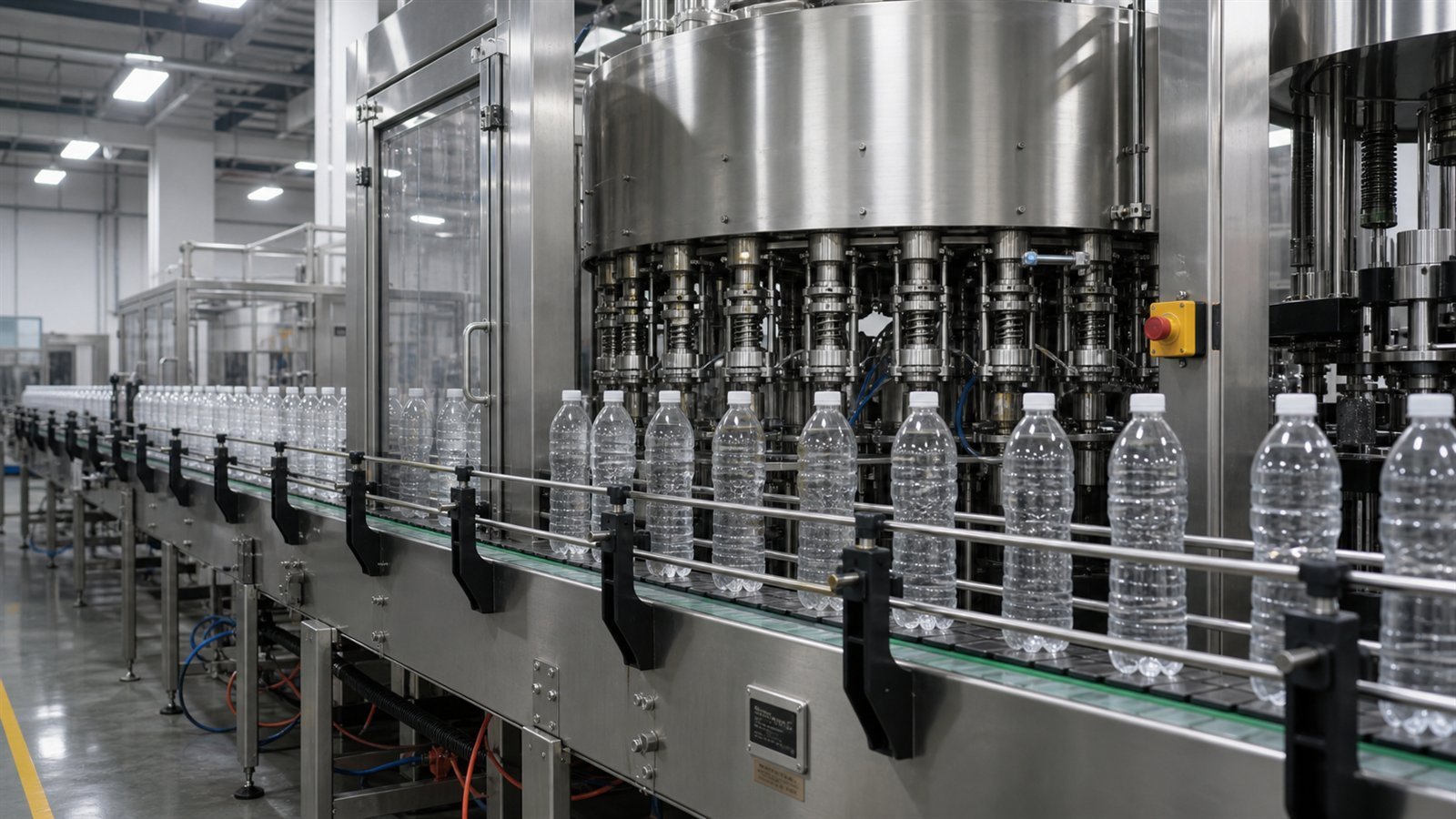
Typical Equipment Blocks
| Process block | Main function | Critical interface |
|---|---|---|
| Water treatment | Prepare product water from the confirmed raw-water analysis. | Treated-water quality, storage and filler demand. |
| PET bottle preparation | Feed ready bottles or convert preforms into stable bottle supply. | Preform, bottle design, high-pressure air and air conveyor. |
| Rinse-fill-cap | Hygienic bottle handling, level control and cap application. | Bottle neck, cap type, product feed and downstream release. |
| Label and code | Apply market-ready identification at the required speed. | Container condition, label material and code inspection. |
| Secondary packing | Create stable shrink packs or cartons for distribution. | Pack pattern, film/carton specification and accumulation. |
Line Balancing Questions Before Purchase
What is the slowest machine?
Ask for rated and expected output of every main machine for the reference bottle.
Where can the line recover?
Buffer conveyors and sensible control logic can reduce full-line stops, but they do not repair poor machine sizing.
How is performance accepted?
Define the test product, bottle, cap, label, film, run time, output calculation and allowed causes of interruption.
Documents a Serious 10,000 BPH RFQ Should Request
- Process flow diagram and complete equipment list.
- Layout with operator, maintenance and material-flow access.
- Utility consumption schedule by machine, not a single unexplained total.
- Bottle and pack format table with required change parts.
- Electrical and control architecture, alarm handling and backup responsibilities.
- Factory acceptance test, site acceptance test and training scope.
- Initial wear-parts list and recommended critical spare parts.
Frequently Asked Questions
What bottle size is normally used to quote 10,000 BPH?
Suppliers often use a common reference bottle, but the quotation must name the exact bottle volume and geometry. Larger or unstable bottles may reduce sustainable output.
Is PET blowing necessary at 10,000 BPH?
Not in every market, but it deserves a formal comparison. At this capacity, ready-bottle transport and storage can become significant while in-house blowing adds compressor, chiller and technical requirements.
How should a complete line be accepted?
Agree the test materials, reference format, continuous test period, output calculation, reject counting, stop classification and responsible parties before the order.
Can a 10,000 BPH line be expanded later?
Some utilities, conveyors and equipment can be designed with expansion in mind, but the future target must be stated early. Expansion assumptions should be visible in the layout and equipment data.
Scope a Balanced 10,000 BPH Water Line
Send the reference bottle, cap, label, pack pattern, raw-water report, factory drawing and required test standard. We will organize the information needed for a complete-line proposal.