 China Beverage Machinery
LanguageEnglish
RTD Coffee Solution
Ready-to-Drink Coffee Production Line
RTD coffee can be black, sweetened, dairy-based or plant-based, creating very different process, allergen, heat-treatment and filling requirements. The complete product matrix must be defined before a common line is proposed.
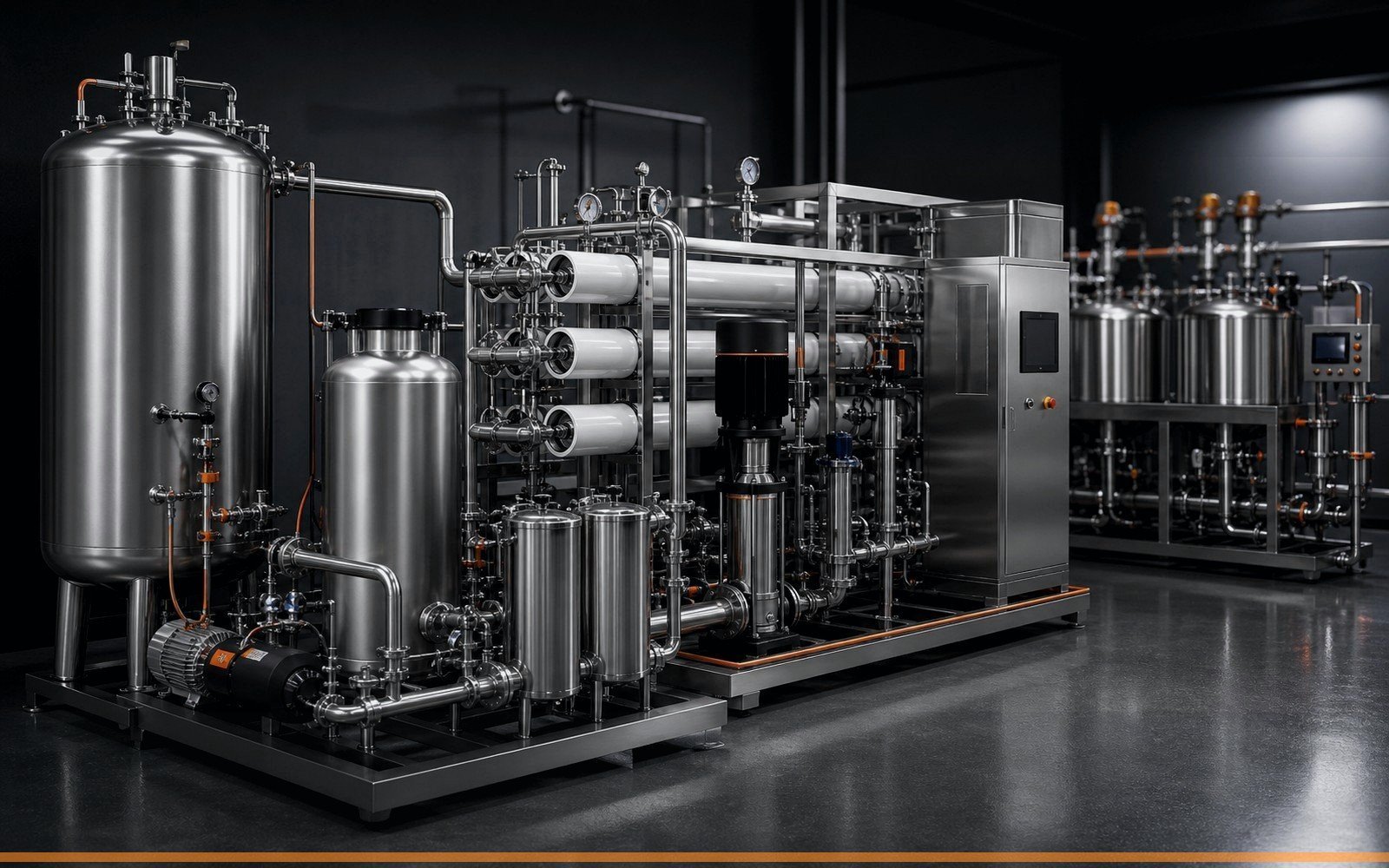
Plan the product path before selecting isolated machines
The factory may receive roasted beans, brewed coffee, extract or concentrate. Each starting point changes extraction, filtration, storage and waste handling, while milk or plant ingredients add blending, homogenization and cleaning decisions.
Low-acid and dairy-containing products can require a more demanding validated process and hygienic filling route. Qualified product and food-safety specialists should define those conditions before equipment engineering is finalized.
Modules to define in the quotation
Each proposal should identify included equipment, options, buyer-supplied items, utility battery limits, controls interfaces and acceptance responsibility.
Coffee input scope
State beans, ground coffee, brewed liquid, extract or concentrate, including package, storage and desired throughput.
Brewing and filtration
If included, define brew ratio, temperature, time, solids, filtration and spent-coffee handling with the product specialist.
Dairy or plant blending
Document fat, protein, stabilizers, allergens, powder induction and hydration requirements.
Homogenization
Pressure, stages and temperature should follow product trials or validated formulation needs rather than being assumed for every recipe.
Thermal and hygienic boundary
Coordinate treatment, buffer, filler, package sterilization or sanitation, and controlled-zone requirements.
CIP and segregation
Coffee oils, proteins, allergens and strong flavor carryover can justify dedicated circuits or validated campaign sequencing.
Information that changes the line configuration
Use one structured data set for every supplier so quotations can be compared on the same product, package, capacity and factory duty.
| Decision area | What the buyer should provide | Engineering impact |
|---|---|---|
| Coffee source | Bean, ground, brewed, extract or concentrate specification. | Defines the front end of the process. |
| Formula families | Black, sweetened, dairy or plant-based products and physical properties. | Defines blending, homogenization and cleaning. |
| Process authority | Validated thermal, filling and storage conditions. | Defines low-acid or sensitive-product architecture. |
| Package | Can, PET, glass or other confirmed package and closure. | Defines filling and post-fill handling. |
| Production schedule | Batch, campaign, allergen sequence and output by SKU. | Defines tank, routing and CIP capacity. |
| Utilities | Steam or hot water, cooling, air, power, water and drainage. | Defines energy and site battery limits. |
Resolve these questions before freezing the equipment list
Brew in-house or buy extract
Compare product control, raw-material handling, waste, labor, cleaning and investment as separate factory models.
Dairy and non-dairy on one line
A shared line requires documented allergen segregation, cleaning validation, campaign order and release controls.
Can versus bottle
Package barrier, thermal route, closure or seam, labeling, distribution and local supply all affect machinery.
Product trials
Use representative product to confirm dispersion, homogenization, heat response, fouling and filling behavior before final design.
Send these project inputs
- Coffee input and extraction scope
- Formula and allergen matrix
- Physical properties and sensitive ingredients
- Validated thermal and filling process
- Package and pack drawings
- Batch, campaign and output plan
- Utilities and process-room layout
- Cleaning, traceability and acceptance needs
Verify these handover points
- Coffee receiving or brewing cycle checked
- Blending and homogenization parameters recorded
- Critical thermal controls verified
- Hygienic route and filler checks completed
- Allergen changeover demonstrated
- As-built recipes and documentation delivered
Questions buyers ask before quotation
Can the line make both black and milk coffee?
Some equipment may be shared, but low-acid process, allergens, homogenization, cleaning and filling routes must be reviewed.
Does an RTD coffee line include a brewer?
Only when in-house brewing is part of the defined scope. A concentrate-based plant needs a different front end.
Is aseptic filling required?
The correct route depends on the validated formula, package, shelf-life target and distribution plan. It is not a universal assumption.
Why are product trials important?
They can confirm powder hydration, stability, homogenization, fouling, thermal response and filling behavior.
Related equipment and buyer resources
Turn product and factory data into a comparable line scope
Send beverage type, validated process, container drawings, saleable output, utilities, factory dimensions, destination, budget range and purchase timeline.