 China Beverage Machinery
LanguageEnglish
Beverage Water Preparation
Water Treatment System Sizing for a Bottling Plant
Treatment capacity should be calculated from the complete water balance, not copied from the filler speed. Product water, bottle rinsing, cleaning, backwash, reject water and storage all affect the design.
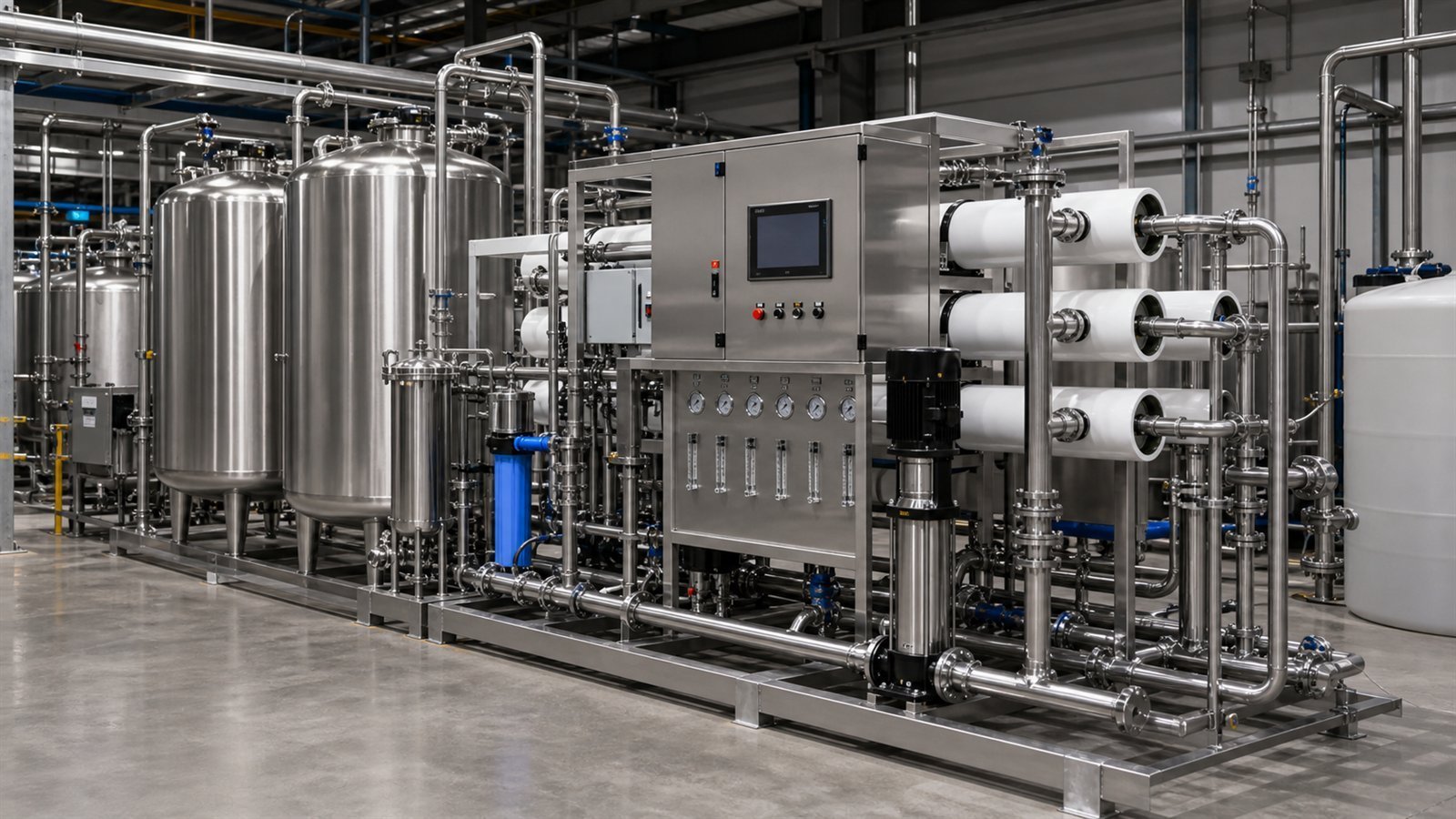
Inputs Required Before Selecting Treatment Technology
| Input | Why it matters | Buyer document |
|---|---|---|
| Raw-water chemistry | Determines pretreatment and membrane or polishing requirements. | Laboratory report with sampling date and source. |
| Target product specification | Defines the required treated-water quality and monitoring. | Internal product standard or applicable market requirement. |
| Production schedule | Changes hourly demand, storage and recovery time. | Hours per shift, shifts per day and cleaning periods. |
| Water uses | Rinsing, cleaning and utility demand can be material. | Line process map and planned sanitation method. |
Build a Complete Water Balance
Product water
Finished beverage volume plus process allowances tied to the planned operating output.
Non-product demand
Bottle rinsing, tank and pipe cleaning, filter backwash and other site uses.
Recovery and storage
Treatment recovery, reject stream, treated-water tank volume and peak filler demand.
RFQ Questions for Water Treatment Suppliers
- Which raw-water test values drive the proposed process?
- What treated-water quality is expected at each monitoring point?
- What recovery assumptions and waste streams are included?
- How are filters, membranes, tanks and pipes cleaned or sanitized?
- Which instruments, dosing systems and consumables are included?
- What happens when raw-water quality or temperature changes?
- How does the treatment system communicate with storage and the filling line?
Frequently Asked Questions
Can treatment capacity be calculated directly from bottles per hour?
No. Bottle size, product volume, rinsing, cleaning, treatment recovery, storage and operating schedule must be considered. BPH alone is not a complete water balance.
Does every bottling plant need reverse osmosis?
No. The process depends on raw-water quality and the target product specification. A laboratory analysis should guide the treatment train.
Why is treated-water storage important?
Storage can separate treatment production from short filler peaks, but tank design and sanitary transfer must protect water quality. It should be sized as part of the operating plan.
What should be included in a water treatment quotation?
Request process flow, design basis, expected quality, capacities, recovery, instruments, consumables, utility loads, cleaning method, exclusions and commissioning tests.
Prepare a Water Treatment Design Basis
Send the raw-water test report, product target, operating schedule and bottle formats. This allows the treatment scope to be discussed from evidence instead of assumptions.