 China Beverage Machinery
LanguageEnglish
PET CSD Solution
PET Carbonated Drink Production and Filling Line
A PET CSD line connects syrup preparation, water treatment, deaeration, chilling, carbonation and pressure filling with pressure-rated bottles, caps, labeling and finished-pack handling. Bottle design and cold-process stability are central to saleable output.
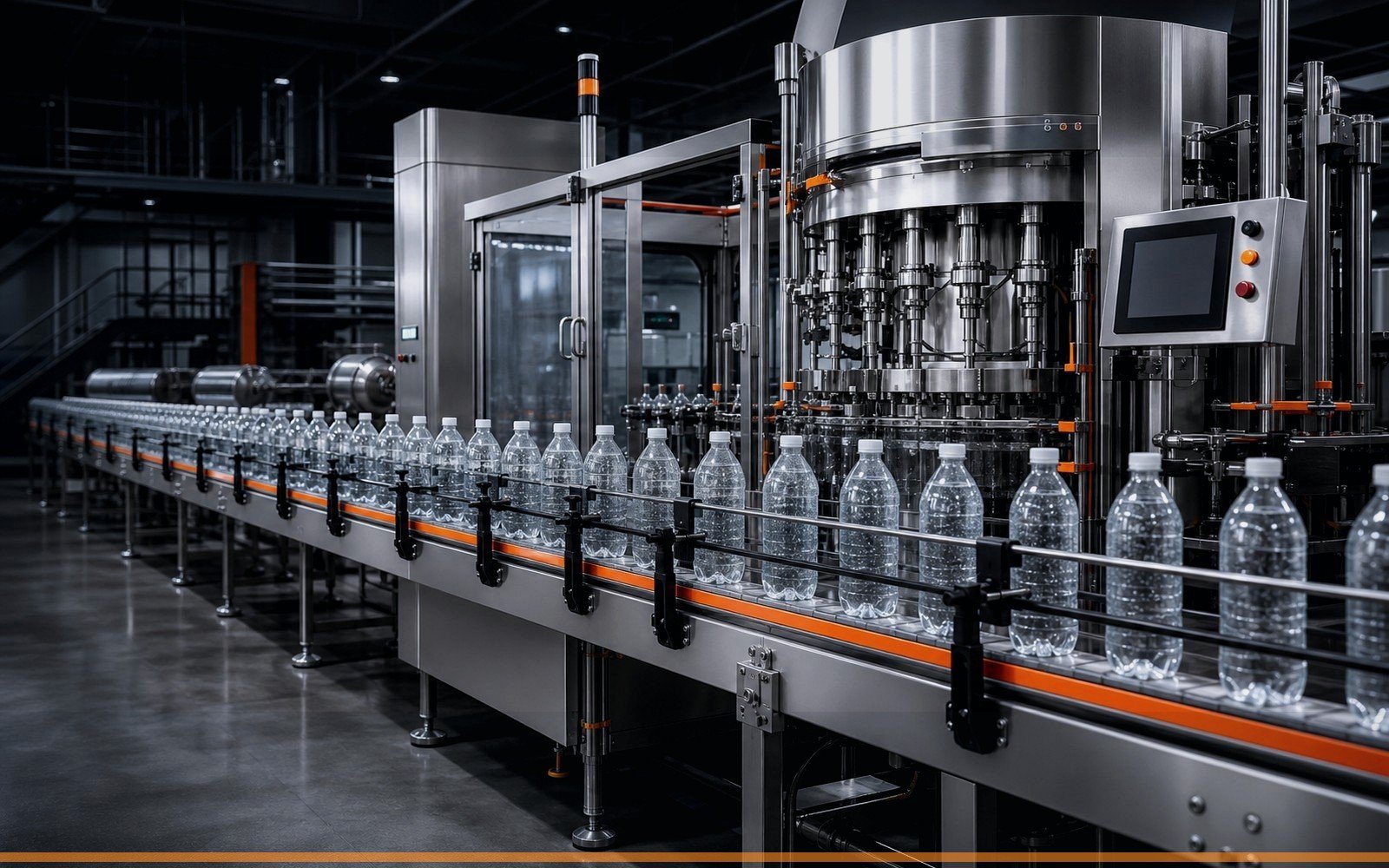
Plan the product path before selecting isolated machines
The complete product matrix should state carbonation, filling temperature, flavors, bottle sizes and pack formats. A line designed for one 500 ml bottle cannot be assumed to deliver the same output or stability for every future container.
When in-house PET blowing is included, preform, bottle pressure performance, high-pressure air, mold changeover and bottle transfer become part of the integrated line scope.
Modules to define in the quotation
Each proposal should identify included equipment, options, buyer-supplied items, utility battery limits, controls interfaces and acceptance responsibility.
Syrup room
Define sugar form, ingredient packages, batch sizes, flavor sequence, filtration and recipe-control requirements.
Cold carbonated process
State carbonation and temperature ranges, incoming water conditions, cooling method and CO2 supply.
PET bottle supply
Provide bottle and preform drawings, weight, neck finish, pressure and thermal performance, whether bottles are blown in-house or purchased.
Pressure filling and capping
Match valves, tank pressure, cap specification and transfer geometry to the product and bottle matrix.
Bottle warming and labeling
Review condensation, warmer duty, bottle drying, label stock and adhesive behavior in local ambient conditions.
Shrink packing and pallet flow
Define bottle grouping, film or tray, handle, pallet pattern and warehouse transfer.
Information that changes the line configuration
Use one structured data set for every supplier so quotations can be compared on the same product, package, capacity and factory duty.
| Decision area | What the buyer should provide | Engineering impact |
|---|---|---|
| Formula | Syrup families, carbonation, acidity, temperature and foam behavior. | Defines processing and filling. |
| PET package | Preform, bottle, neck, cap, label and pack drawings. | Defines blowing, filling and downstream scope. |
| Capacity | Saleable output by bottle and pack format. | Defines balanced machine speeds. |
| Utilities | Cooling, CO2, power, low and high-pressure air, water and drainage. | Defines total plant demand. |
| Factory | Blower, process room, filling, packing and warehouse layout. | Defines transfer and access. |
| Acceptance | Product conditions, run test, fill, cap, label and pack checks. | Defines measurable handover. |
Resolve these questions before freezing the equipment list
Blow bottles or buy them
Compare local bottle supply, freight, storage, output, utilities, technical capability and future formats.
Bottle pressure performance
Confirm the design and testing responsibility for carbonation, storage temperature and distribution conditions.
One line for several bottle sizes
Document speed, change parts, changeover time, accumulation and pack format for every confirmed SKU.
Nominal versus saleable capacity
Size the filler, labeler, packer and utilities as a line, with normal stops and changeovers visible.
Send these project inputs
- Formula and carbonation matrix
- Preform, bottle and cap drawings
- Label and shrink-pack formats
- Bottle supply model
- Saleable output by SKU
- Cooling, CO2 and air conditions
- Factory layout and warehouse flow
- FAT and documentation requirements
Verify these handover points
- Bottle pressure and transfer checked
- Carbonation and temperature recorded
- Fill level and cap torque measured
- Warmer and label condition verified
- Shrink-pack quality and output recorded
- Molds, change parts, recipes and manuals handed over
Questions buyers ask before quotation
Can a water bottling line fill CSD?
Not without pressure-compatible processing, filling, bottles and closures. Carbonated duty should be engineered separately.
Should the PET blower be connected directly to the filler?
Direct integration can reduce empty-bottle handling, but output balance, air, mold changes and line recovery must be planned.
Why warm bottles after cold filling?
Warming can reduce condensation and support labeling and packing in warm or humid conditions. The need depends on the local process and materials.
What sets the real line speed?
The slowest or most frequently stopped module, format, package quality, changeover and operating conditions determine saleable output.
Related equipment and buyer resources
Turn product and factory data into a comparable line scope
Send beverage type, validated process, container drawings, saleable output, utilities, factory dimensions, destination, budget range and purchase timeline.