 China Beverage Machinery
LanguageEnglish
CSD Capacity and Process Planning
10,000 BPH Carbonated Drink Filling Line: Process, Equipment and Layout Guide
A 10,000 BPH carbonated drink line must hold carbonation, control foaming and balance mixing, chilling, isobaric filling, closure application, labeling and packing around one reference package.
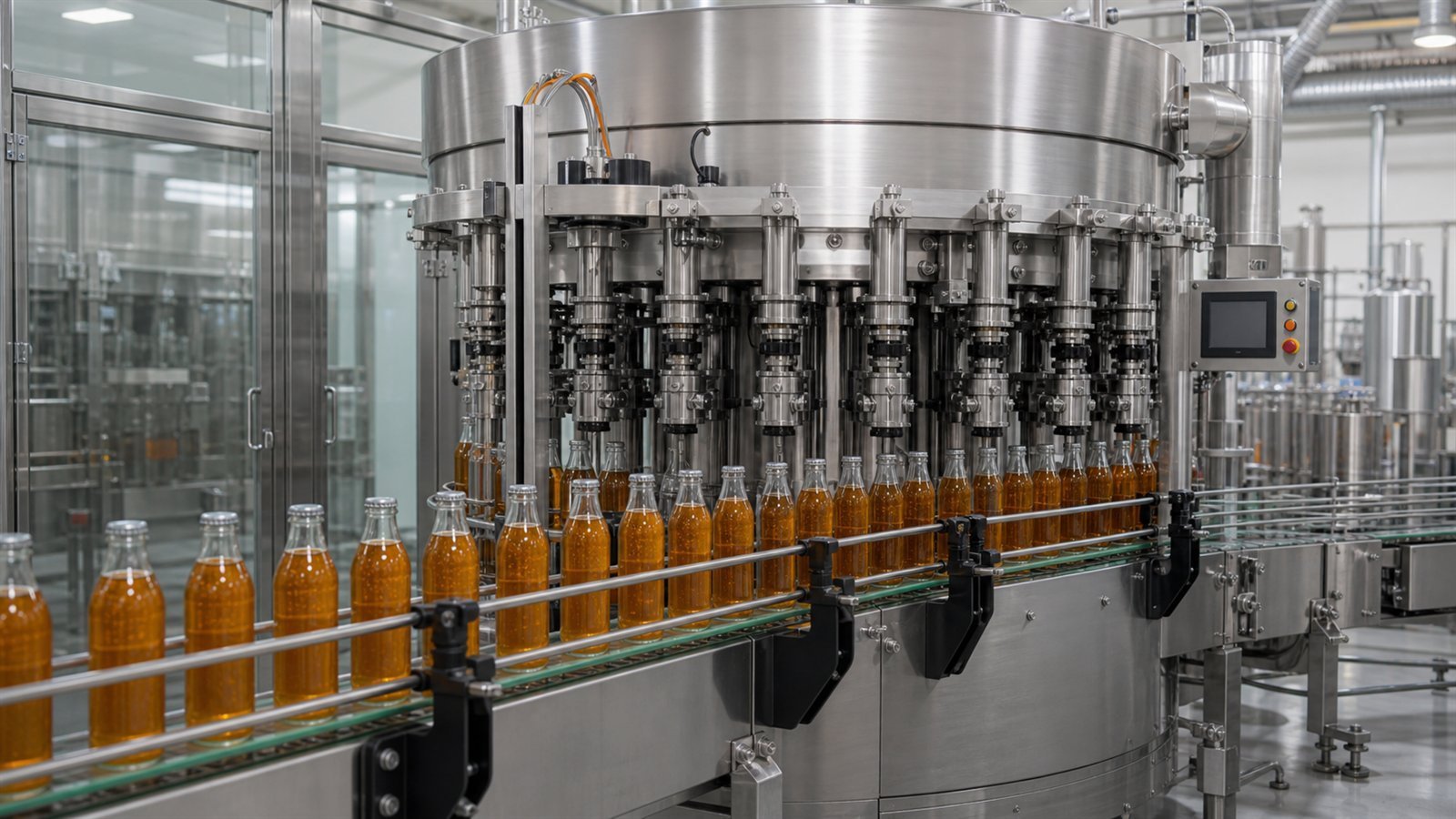
Complete-Line Scope for a 10,000 BPH CSD Project
| System | Buyer decision | Quotation evidence |
|---|---|---|
| Product room | Batch or continuous preparation, recipe handling and cleaning boundary. | Process diagram, tank list and control description. |
| Carbonation | Product range, target condition and changeover requirement. | Operating basis, instrumentation list and interface points. |
| Filling and closure | Container material, bottle or can drawing, closure and pressure limits. | Machine configuration, contact materials, change parts and inspection method. |
| Downstream | Label, code, multipack, carton and pallet pattern. | Sustainable line output and accumulation strategy. |
Why Carbonated Line Quotations Differ
Different capacity definitions
One quotation may state only filler speed while another includes the realistic output after closure, labeling and packing constraints.
Different process boundaries
Water treatment, syrup preparation, chilling, carbonation and CIP may be included, optional or excluded.
Different package assumptions
Bottle size, pressure resistance, cap, label and multipack format affect equipment, utilities and line layout.
Layout, Utilities and Acceptance Checklist
- Dimensioned factory plan with columns, drains, doors, ceiling height and product-room location.
- Water, electrical, compressed-air, cooling and CO2 supply assumptions with connection boundaries.
- SKU list covering product, bottle or can, closure, label and finished pack.
- Defined startup, product change, cleaning and shutdown sequences.
- FAT checks for output, fill behavior, closure integrity, rejects, alarms and downstream accumulation.
- SAT plan that separates building and utility readiness from supplier equipment performance.
Frequently Asked Questions
Does 10,000 BPH describe the filler or the whole line?
It must be defined in the quotation. Buyers should request the nameplate speed and the sustainable accepted output of the complete line for a stated package.
Can one carbonated line fill PET bottles, glass bottles and cans?
These packages need different handling, filling and closing equipment. Some shared upstream systems may be possible, but the packaging routes should be engineered separately.
Why is product temperature important for carbonated filling?
Product condition influences gas behavior and foaming. The engineering basis should be agreed with the recipe and process supplier rather than assumed from a generic line.
What information is needed for a layout?
Send building dimensions, columns, doors, drains, ceiling height, utility locations, raw-material flow, warehouse flow and every intended package format.
Define a 10,000 BPH Carbonated Line
Send the beverage type, carbonation basis, container drawing, closure, priority output, pack format, utilities and floor plan for a scope-by-scope technical review.