 China Beverage Machinery
LanguageEnglish
Small Water Plant Planning
2,000 BPH Small Water Bottling Line Planning Guide
A 2,000 bottles-per-hour project can be a sensible first commercial line, but only when the bottle format, water source, packaging labor and future expansion path are defined together.
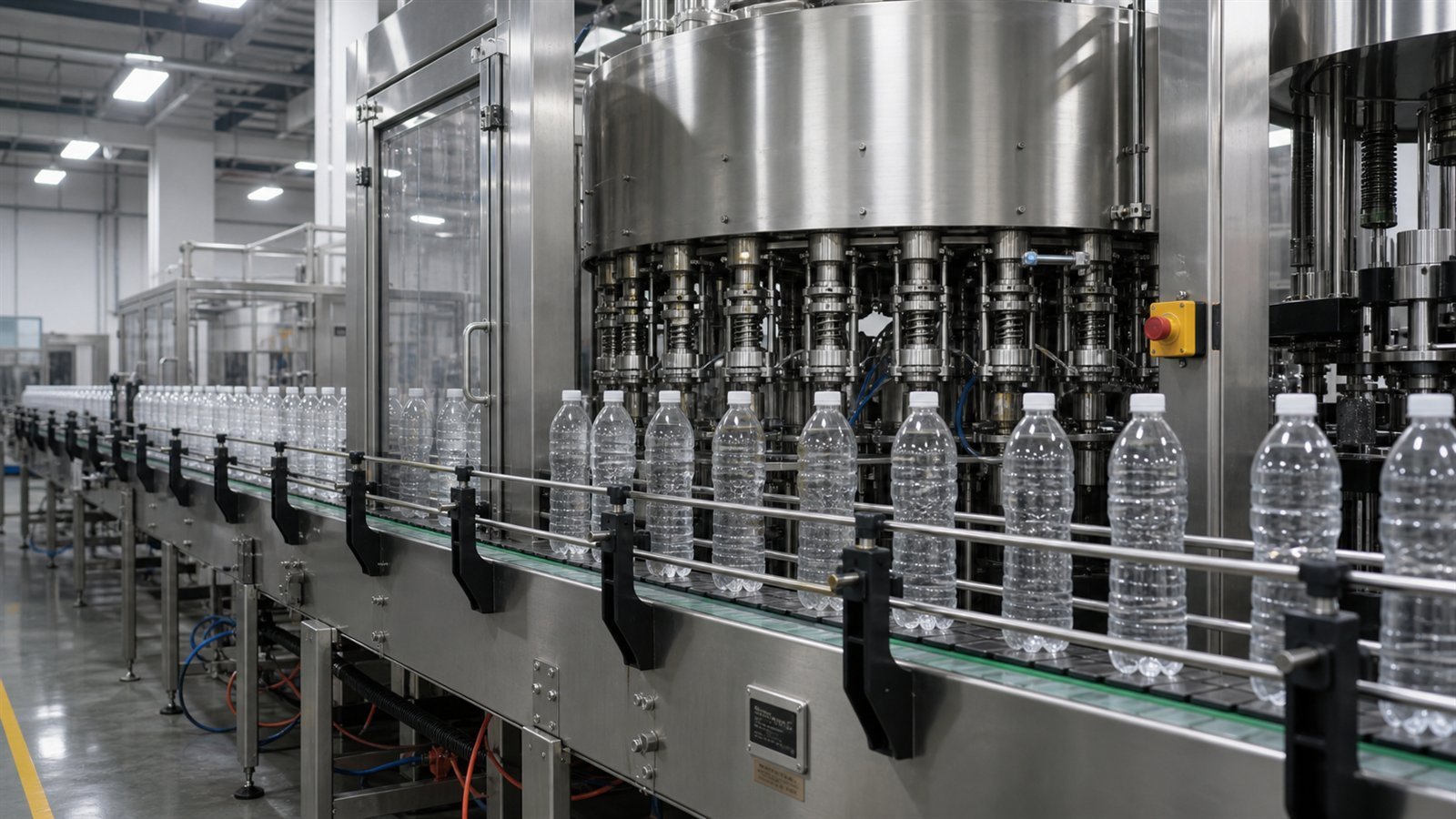
What a 2,000 BPH Line Normally Needs
Water preparation
Raw-water testing, filtration, treatment, storage, disinfection and hygienic transfer to the filler.
Primary packaging
Bottle feeding or PET blowing, rinsing, filling, capping and cap handling matched to the chosen bottle.
End-of-line work
Labeling, date coding, manual or automatic packing, finished-product handling and basic quality checks.
Decisions That Change the Complete Configuration
| Decision | Why it changes the line | What to send in the RFQ |
|---|---|---|
| Bottle sizes | Change parts, conveyors, labels, packs and output per hour depend on bottle dimensions. | Drawings or samples for every planned bottle and cap. |
| Ready bottles or preforms | Changes storage, compressed-air demand, investment scope and operating workflow. | Local bottle/preform availability and target bottle weight. |
| Pack format | Shrink packs, cartons and manual bundling require different equipment and labor. | Bottles per pack and film/carton specification. |
| Future capacity | Oversized utilities or conveyors may help expansion, but unnecessary oversizing can waste budget. | First-year target and realistic three-year demand. |
How to Compare Quotations for a Small Line
Compare every quotation by boundary of supply. Confirm whether the offer includes water treatment, tanks, air compressor, coding, conveyors, installation materials, initial spare parts and commissioning. Ask each supplier to state the assumed bottle size and the output basis.
- Request a process flow and an equipment list with model-by-model responsibility.
- Ask which operations remain manual and how many operators are expected.
- Check local availability of caps, labels, film, preforms and routine wear parts.
- Require an acceptance method for the filler and for the complete line.
Frequently Asked Questions
Is 2,000 BPH suitable for a startup water factory?
It can be, when expected sales, bottle supply, labor and distribution support that output. The project should be sized from realistic monthly demand rather than the largest machine the budget can purchase.
Can a 2,000 BPH line fill several bottle sizes?
Usually yes within the machine design range, but each additional size adds change parts, setup time, labels, packs and inventory. Start with a limited bottle family when possible.
Should a small plant include a PET bottle blowing machine?
It depends on local bottle supply, freight and storage. Buying ready bottles can simplify the first phase, while in-house blowing may improve logistics once volume justifies the utilities and technical work.
What information is needed for a quotation?
Provide raw-water information, bottle and cap details, target output, pack format, factory dimensions, destination country, budget range and purchase timeline.
Build a Practical Small-Line RFQ
Share your water source, bottle sizes, target packs, factory space and destination. We will help organize the equipment scope and questions that a technical quotation should answer.