Naijá Pidgin
Water bottling line: plan from water source reach finished pack
For bottled water business, di filler alone no be di complete line. You need match di water-treatment scope, container supply, filling, closing, inspection and packing. Start with di water product wey you wan sell, di actual bottle and cap, then di good packed output you need. No assume say one supplier’s machine list covers every connection, utility or site job. This guide helps you turn those open questions into one scope wey suppliers fit review.
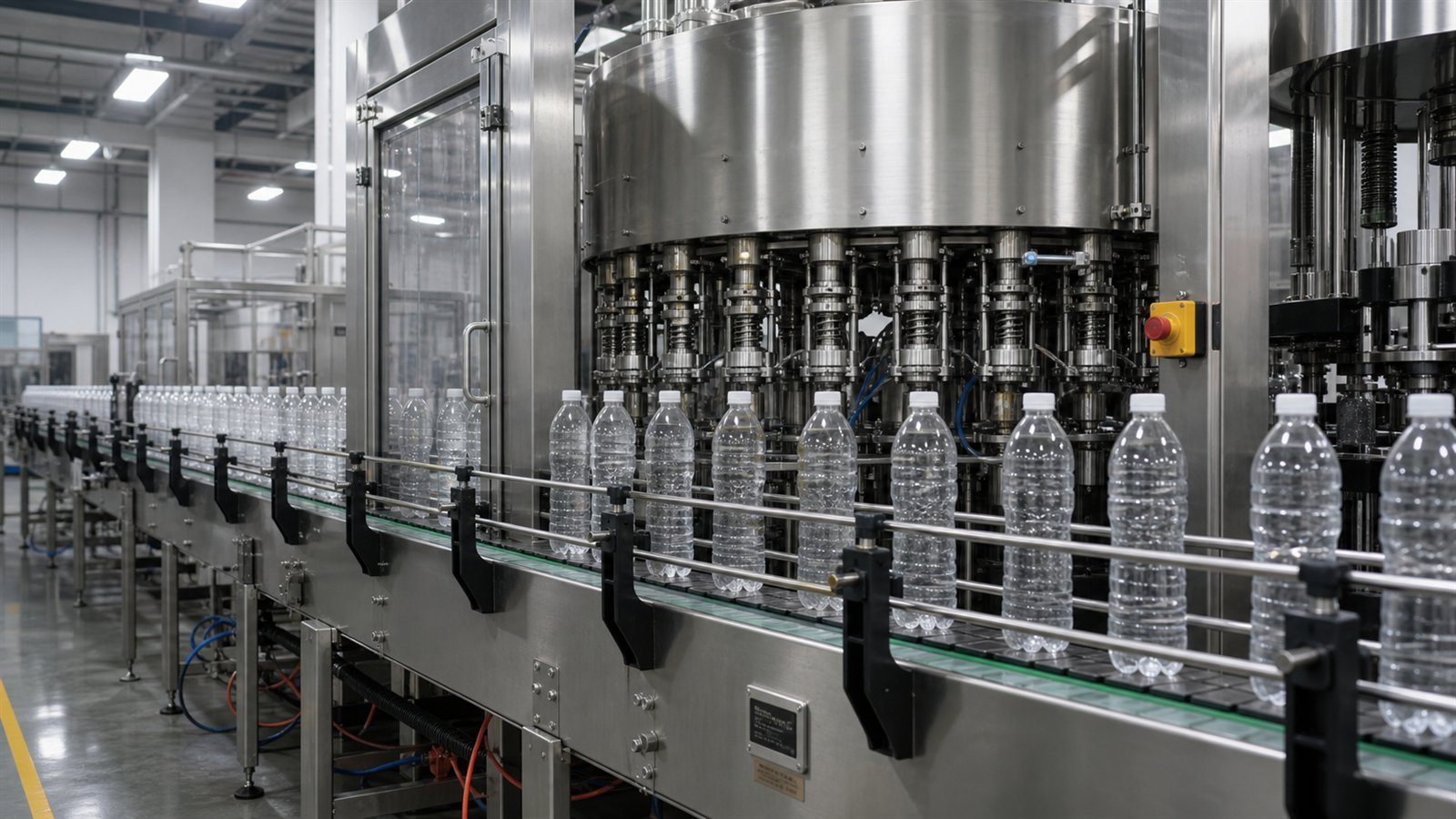
Buy empty bottles or blow PET for your own site?
If you buy ready bottles, check delivery quality, storage space, handling and how bottles go enter di filler. If you blow bottles on site, include preforms, moulds, air supply and di connection from blower to filler. Compare both options with di same bottle drawing, neck and closure. Di choice no be machine price alone: incoming packaging, warehouse space and who go control each interface matter too.
| Bottle route | Scope wey must enter di review |
|---|---|
| Buy ready bottles | Receiving, protected storage, bottle feeding, sample quality and di transfer into filling. |
| Blow PET on site | Preform and mould qualification, blowing equipment, specified air utilities, bottle handling and controls. |
Convert bottle target to water demand with clear units
Planning example only, no be machine rating:5,000 bottles per hour ×0.5 litre na2,500 litres per hour inside those bottles. This calculation no include every rinse, startup loss or cleaning demand. Also, filled bottles no automatically mean accepted finished packs. State shift hours, planned stops, bottle size, pack pattern, counting point and reject rule before comparing quoted bottles/hour. Ask suppliers which product and format their speed statement covers.
Why water fit finish when treatment flow look enough?
Separate water wey enters good product from other factory uses. Bottles/hour and litres/hour cover different boundaries. Before you choose treatment, tank and pump, list demand by time, required water quality and which users go run together. Daily total alone fit hide peak shortage.
| Demand boundary | Wetin quotation and trial must define |
|---|---|
| Water reaching filler | Bottle volume × filling rate with correct units. Record startup, rejected product and flushing separately; no count one loss twice. |
| Rinsing and cleaning | Equipment, batch water, timing, quality and simultaneous use. No use one universal water-per-bottle allowance. |
| RO if you select am | Confirm whether flow means feed or permeate. State recovery basis, concentrate flow and reference conditions against actual water analysis and variation. |
| Tank and pump | Usable level range, refill time and pressure when users run together. Buffer no fit cover continuing supply shortage. |
Request water balance wey names supply and discharge boundaries, reference conditions, measuring points and responsible suppliers. Compare treatment trial with actual site before acceptance. Flow calculation no replace product-water quality approval or cleaning validation.
Prepare evidence before you request final quotation
Send source-water analysis with sample date and known variation, intended product specification, bottle and cap drawings, physical samples, target accepted output, final pack, site layout, utility information and destination. Mark unknowns. Ask di offer to separate machines, change parts, connecting equipment, installation, local work and acceptance trials. Agree trial materials, duration, good-pack counting point and how stops or rejects go enter di record. Keep gaps for later site tests in writing; moving bottles in a video no prove di entire project.
Email di water-line project team sales@allottech.comQuestions
Must every water line get bottle blower?
No. A line fit use suitable bought bottles if receiving, storage and feeding are planned. On-site blowing adds its own preform, mould, air and integration scope.
Bigger tank fit fix small treatment unit?
Only for a limited interruption wey calculation supports. Compare usable volume, draw rate and refill schedule. If demand stays above supply, di tank go still empty.
One water report enough to settle treatment?
Na starting evidence. Identify source, sample date, operating range and known seasonal changes. Record missing evidence and review treatment against intended product requirements.